Wall Street’s Biggest Weaknesses

Hey investor 👋
There's a myth that's been running around the market for some time: The big guys have the advantage.
Hedge funds, pension funds, private equity funds, venture capital funds, you name it.
They have financial backing, tools, and information at the tips of their fingers, so they must be able to get into those high-flying stocks before the retail investor like you and me.
Right?
Not so fast.
The counterintuitive idea is that, in fact, these funds operate with a different set of constraints and incentives that make their investing world much different than ours.
And while they might generally have more access to information, they're not always able to act on these additional resources at their disposal.
Restrictions, incentives, bureaucracy, and personal desires often get in the way of allowing these fund managers to create capital wealth vehicles that grow faster than the index.
As individual investors, the reality is much simpler.
The only things we subscribe to are our own playbooks and internal frameworks.
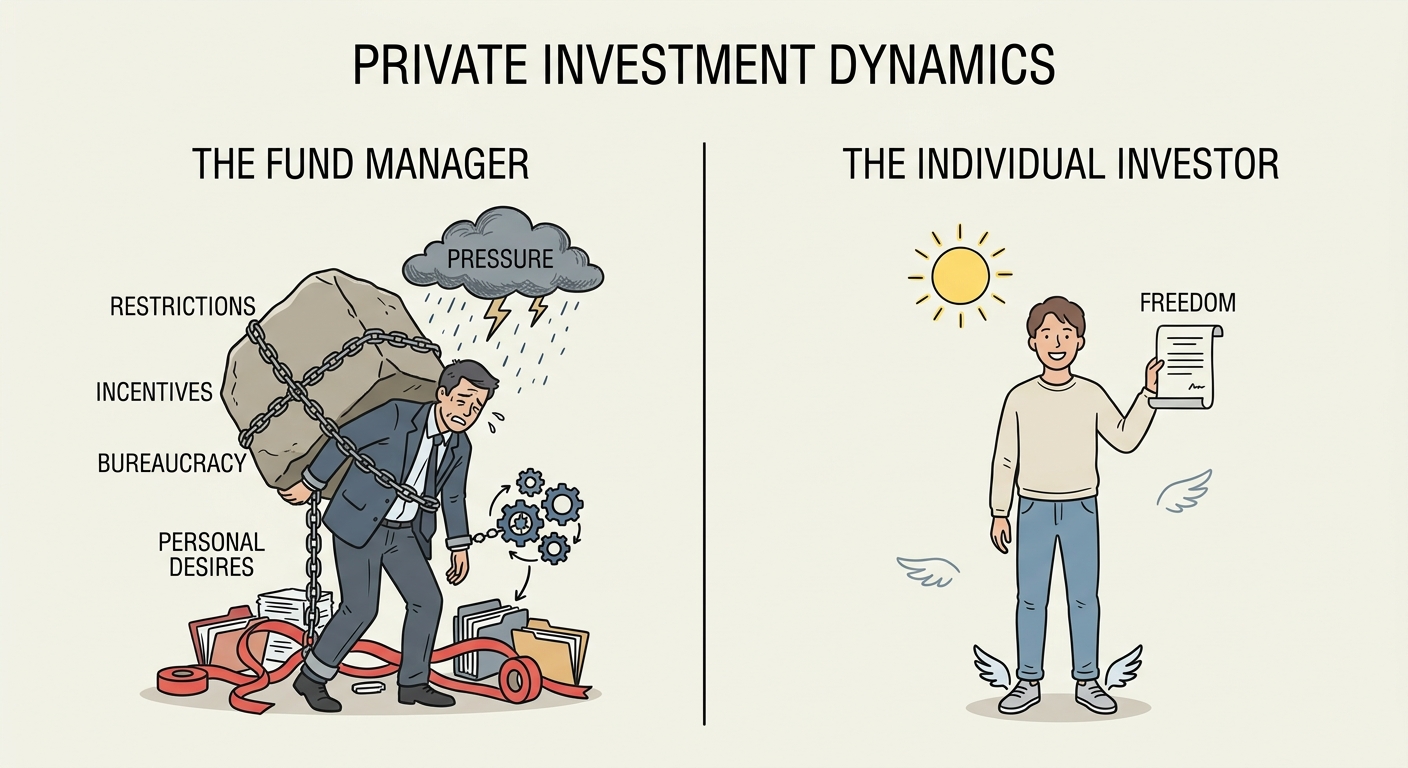
This makes our lives much different: we have free rein to design our strategies in a way that fits our investing philosophy.
We don't have to respond to anybody else.
There are no rules we have to follow.
There are no growth targets we have to meet.
Our investment philosophies can be deployed with few to zero guardrails:
-
Want to invest only in companies paying high dividend yields? No one's stopping you!
-
Want to buy high quality compounders and invest for the long term? There are no fund rules saying you can't.
-
Want to buy companies only under a market cap of $1 billion? Go for it!
As I'll talk about in the below sections, restrictions, mandates, pressures, and alternative incentives stunt the growth of professional funds such that they have a much more difficult time outperforming the index than you or I might.
Table of Contents
-
Career Risk
-
Fund Limitations
-
Size Restrictions
-
Bureaucracy
A. Career Risk
This one is one of the most fascinating dynamics in all of wealth management.
To understand how this one works, it's helpful to start from square zero and understand why active funds exist and how these managers get paid.
At their most fundamental level, active funds exist because investors believe professional managers can perform above-average (at least beyond standard index returns) given their access to knowledge and information.
Investors pay these managers because they expect them to use their additional resources and expertise to generate superior returns.
The most common method of payment is by the term called AUM, which stands for Assets Under Management.
For many funds (but not all), managers make a percent of AUM (e.g. 1%).
This means the more capital that they attract to the fund, the more they get paid.
This creates two key incentives:
-
To grow the fastest
-
To not be the worst
The first option is by far the flashiest. A fund manager follows the "get rich quick" protocol and tries to invest in the hottest companies, produce the highest gains, and grow the fastest.
A recent example?
Leopold Aschenbrenner of Situational Awareness LP.

Source: Fortune
He used heavily leveraged concentrated bets on AI stocks and hardware infrastructure, triggering margin calls that forced liquidation of the much of the public stock portfolio, worth $16 Billion.
The story looks similar for others of the same personality archetype.
When using margin and making risky bets, the good times are good, but the bad times are really bad. Here were some other examples:
-
Bill Hwang (Archegos Capital Management) lost $20 billion in 2021 due to extreme leverage on concentrated stock swaps triggering margin calls.
-
John Meriwether (Long-Term Capital Management) lost $4.6 billion in 1998 due to high-leverage arbitrage trades collapsing during Russia's default.
-
Brian Hunter (Amaranth Advisors) lost $6.6 billion in 2006 due to speculative bets on natural gas futures.
The common playbook?
Speculative plays on speculative assets aimed at maximizing returns.
As the story goes... it usually doesn't work out.
Now to the second dynamic:
"To not be the worst"
What does this mean?
Managers stand out when they perform poorly, especially to the investors in the fund.
If investors feel their money is with a subpar manager, what's stopping them from pulling their capital?
But if those managers perform the same as everybody else, you can't blame that manager.
You blame the market.
So investment managers are incentivized to protect their AUM (and by nature, their pay) by doing the same as everybody else.
This is supported by data from the National Bureau of Economic Research.
In 1998, authors Judith Chevalier & Glenn Ellison released a paper on the career considerations of fund managers, after evaluating a 453 person cohort over the course of many years.
They describe this phenomenon of "herding", where managers tend to replicate peer investment activity to avoid placing at the bottom of the performance pile.
The most interesting part? It impacts young managers more significantly than tenured ones:
"Here, we find that young managers are more likely to lose their jobs if their investment decisions were "bold" or unusual in terms of the fund's beta or unsystematic risk level... Young managers may thus also have an incentive to herd" - (Chevalier and Ellison et al. 1998).
This is especially an important phenomenon because the market is naturally short-term oriented, making it more difficult to deploy other long-term strategies that may differ from peers:
"We note also an apparent short-term bias in performance evaluation" - (Chevalier and Ellison et al. 1998).
So not only are managers hard-pressed to perform "in-line", but they are disincentivized from taking risks and appearing wrong for longer time periods.
As you can imagine, this has a clear, tangible impact on investment decisions.
Contrarian bets become much less likely.
Portfolio constituents mimic the index.
Funds' portfolio holdings start to look really similar to each other.
So the performance starts to converge to market averages, and they take a much higher fee in the process.
B. Fund Limitations
When a fund is created, there is often what's called a Limited Partnership Agreement (LPA) between the fund manager and the investors in the fund.
This LPA creates clear guidelines around investment strategy (what asset classes, geographies, sectors, or market cap ranges the fund can invest in), concentration limits (how much money can be in a single position), and leverage limits (how much margin the fund can take on).
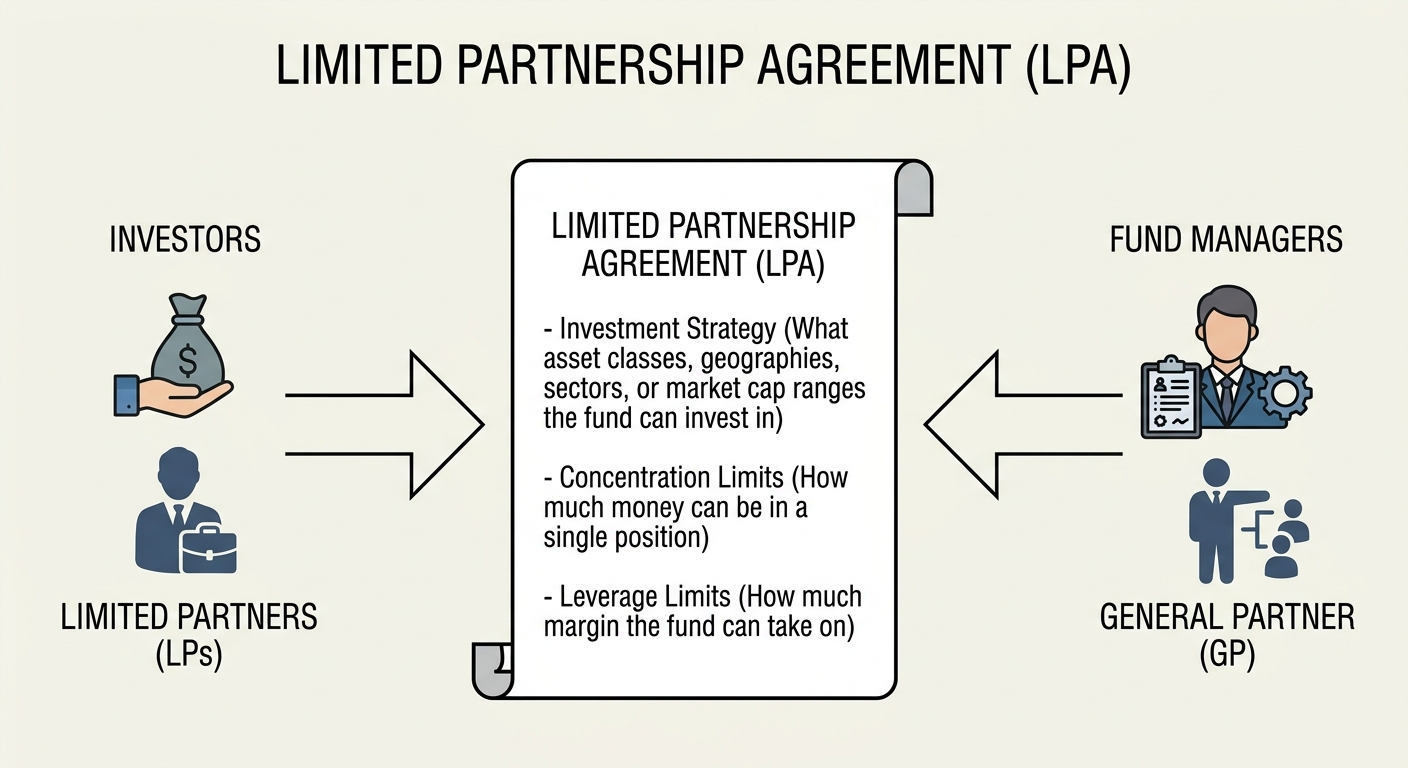
Once the LPA contract is signed, it is very difficult to change.
Why?
-
Large changes require a supermajority vote from partners
-
Bureaucracy of affiliated committees with different interests
-
Risk aversion/career risk of professional managers
-
The desire to keep clients who invest with that fund purely because of these investing requirements as outlined in the original contract
In other words, LPA investing limitations are in place for a long time.
So what are some examples of these limitations?
Example 1: Industry Restriction
Fund - Eventide Gilead Fund (Mutual Fund: ETGLX)
This fund is a fundamental growth mutual fund actively managed to capture high-return businesses.
The prospectus legally requires the managers to apply "ethical screening criteria."
It explicitly forbids the team from purchasing stock in companies that derive revenue from defense/weapons, tobacco, gambling, or adult entertainment, or even in certain biological research subindustries.
"The Adviser seeks to invest in companies that reflect the following values: Respecting the value and freedom of all people; this includes the right to life at all stages and freedom from addictive behaviors caused by gambling, pornography, tobacco and alcohol." - 2016 Prospectus
If there was a high quality compounder in the defense or tobacco industry (where many reside, in fact), they cannot even begin to consider an investment in it because of the fund mandate.
Just take a look at this chart from Morgan Stanley's 2022 ROIC pamphlet:
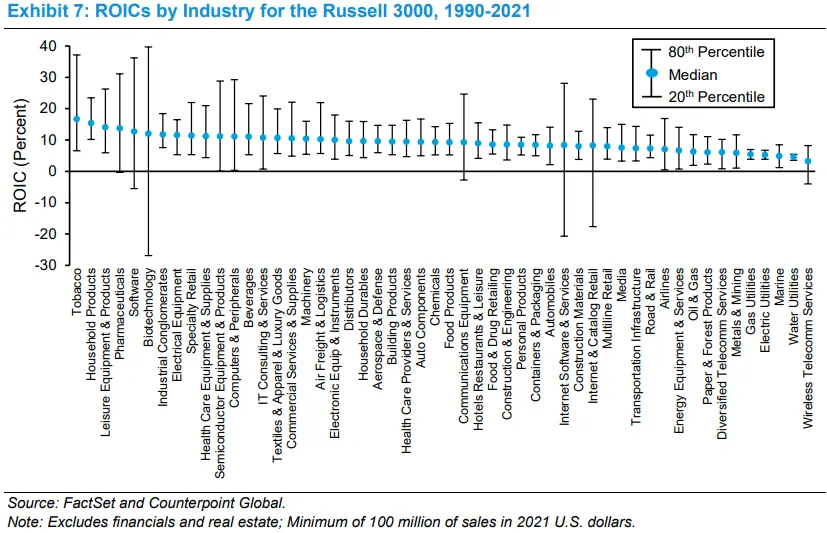
Source: Morgan Stanley, 2022
Tobacco actually had the highest median ROIC over a 30-year rolling period into 2021.
While investing in this industry might not be for everyone, it would be crude to write it off as an uninvestable asset class.
Example 2: Market Capitalization Restriction
Carillon Chartwell Small Cap Value Fund; Ticker CWSIX (Class Chartwell) / CWSAX (Class A)
This fund is actively managed, targeting undervalued small-cap U.S. companies
Generally speaking, the fund must maintain at least 80% of its net assets in companies that fall within the market cap range of the Russell 2000 Value Index.
The problem arises when they invest in a winner: while they aren't necessarily forced to sell immediately, their fund limitations require that most invested assets fall within the indicated range.
Some positions may need to be sold if this 80% threshold is broken, and new investments are forced to be within the indicated range:
"Under normal market conditions, the fund invests at least 80% of its net assets in equity securities of small capitalization companies... Because small capitalization companies are defined by reference to an index, the range of market capitalization of companies in the index will change with market conditions. The fund may continue to hold securities of companies whose market capitalization has grown to exceed the market capitalization range of the index" - 2023 Prospectus
Funds like these not only tend to have higher turnover (creating a higher tax burden and increasing transaction costs), but also have limited ability to benefit fully from compounding, and are forced to continuously reallocate capital to ideas, which presents additional opportunities to misallocate capital.
New investment ideas are also severely limited, forcing them to allocate capital to ideas which might not have the highest ROI opportunity.
Example 3: Geographic Restriction
Fund - Polen Growth Fund (POLIX)

Source: LinkedIn
In this fund, the prospectus explicitly limits non-U.S. company exposure to no more than 20% of net assets.
"The Fund may invest up to 20% of its total assets in foreign securities, including direct investments in common stocks of foreign companies and American Depositary Receipts ('ADRs')." - Polen Capital Fund
The obvious problem here is finding a quality compounder selling at a highly attractive valuation based in a mature market such as Sweden or Canada, and NOT being able to invest.
That is purposefully restricting your basket of opportunities.
Example 4: Allocation Restriction
Fund -- MANY FUNDS!
The SEC "75-5-10" Rule from 1940 dictates that any fund calling itself "diversified" in its prospectus must satisfy the following for at least 75% of its total portfolio:
-
No single stock can account for more than 5% of total assets.
-
The fund cannot own more than 10% of the outstanding voting stock of any single company.
Another SEC ruling, Rule 22e-4, forces funds with daily redemptions (allowing investors to pull money out on a daily basis) to have liquidity risk management programs.
A core component of such program is limiting how much of a fund's portfolio can be invested in illiquid assets.
An example of how this plays out in practice can be seen in the Third Avenue Value Fund (TAVFX).
The fund's policy limits illiquid investments to 15% of its total net assets.
"As a fundamental policy, each of Third Avenue Value Fund, Third Avenue Small-Cap Value Fund... may not acquire any illiquid investment if, immediately after the acquisition, the Fund would have invested more than 15% of its net assets in illiquid investments." - Statement of Additional Information, Third Avenue Trust
If a fund manager identifies an attractive illiquid opportunity but is already at the 15% limit, they cannot simply allocate more capital to it.
They may need to sell an existing illiquid position first, even if they would otherwise prefer to hold it.
Funds tend to have a plethora of rules such as this one dictating how capital can be allocated across the fund.
All of these different restrictions have a clear impact: they prevent the ability to be flexible and opportunistic in capital markets.
In a place where you make money based on asymmetric bets, you can imagine these restrictions can have an outsized impact on the ability of any given fund to deliver outperformance over the long run.
C. Size Restrictions
This one is more about practical limitations rather than legal limitations.
When fund managers have to allocate capital, they have to consider the size of their investable cash pool relative to the investable securities they can allocate that cash to.
Imagine a $10 billion fund.
The manager comes across a high-quality company with strong growth, high returns on capital, low debt, excellent management, and a reasonable valuation.
However, the company has only a $300 million market cap.
Even if the manager bought 10% of the entire company (which is often difficult because these companies tend to be illiquid, and the purchase would trigger quite a few regulatory filings), that total investment would only amount to $30 million.
In a $10 billion portfolio, a $30 million position represents just 0.30% of total assets.
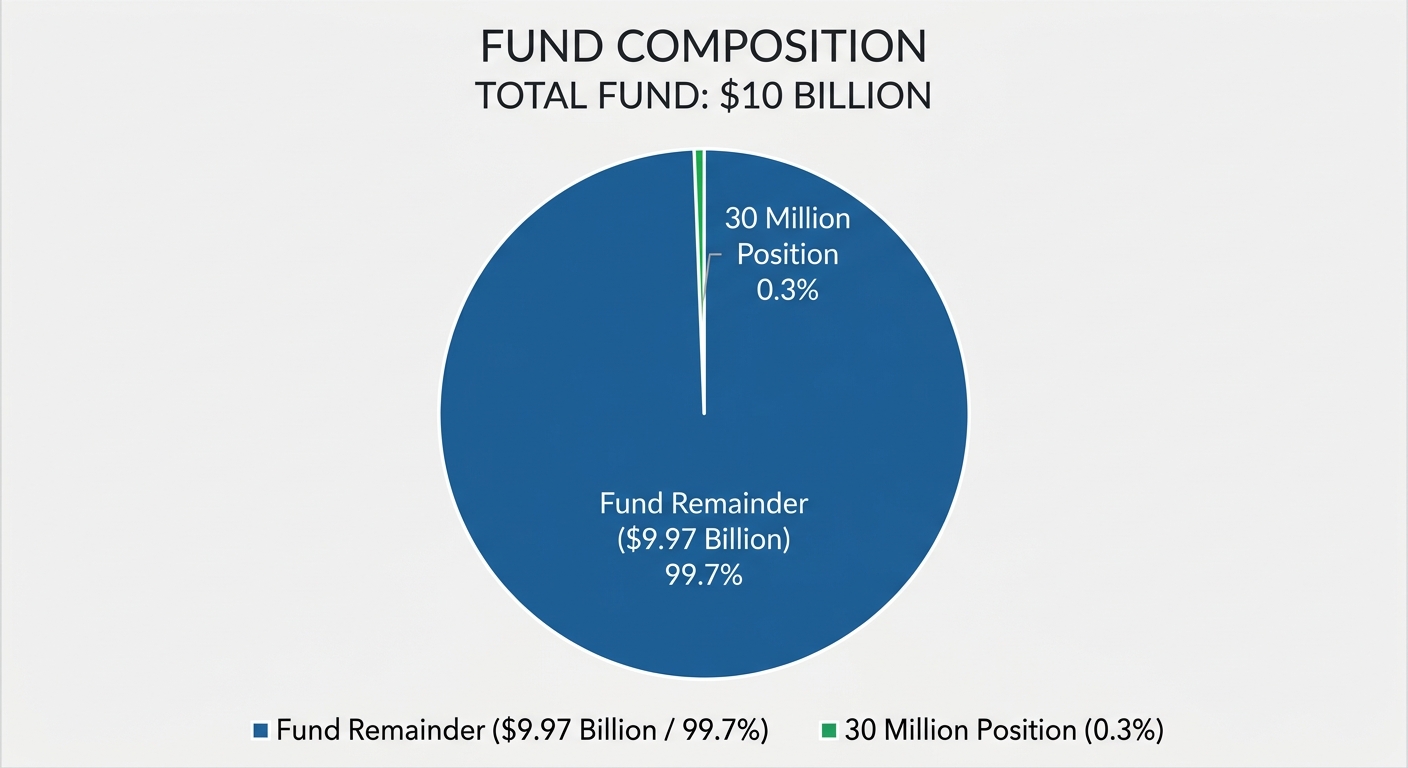
Even if that stock grows by 10X (900% gain) it only adds 2.7% to the total fund's performance. This is assuming the rest of the fund does not grow at all!
So, the problem becomes much more practical rather than legal.
Researching, attending management meetings, and continuously monitoring a smaller company takes just as much time/effort as analyzing a $5 trillion corporation such as Apple.
What you'll find in the industry is that the manager cannot justify spending 50 hours of research on a position that, even in a best-case scenario, barely moves the needle for fund performance.
The cost does not justify the return.
As a result, larger funds are usually forced to ignore these small companies entirely.
To make a new position worth their time, often a fund deploys around 1-2% of total assets into a position.
In this sense, a $10 billion fund must deploy $100 million to $200 million per stock.
To deploy $100 million without owning more than 5% - 10% of a company's outstanding shares (and without driving up the market price while trying to buy in), the $10B fund manager can only shop in companies with market caps above $2 billion.
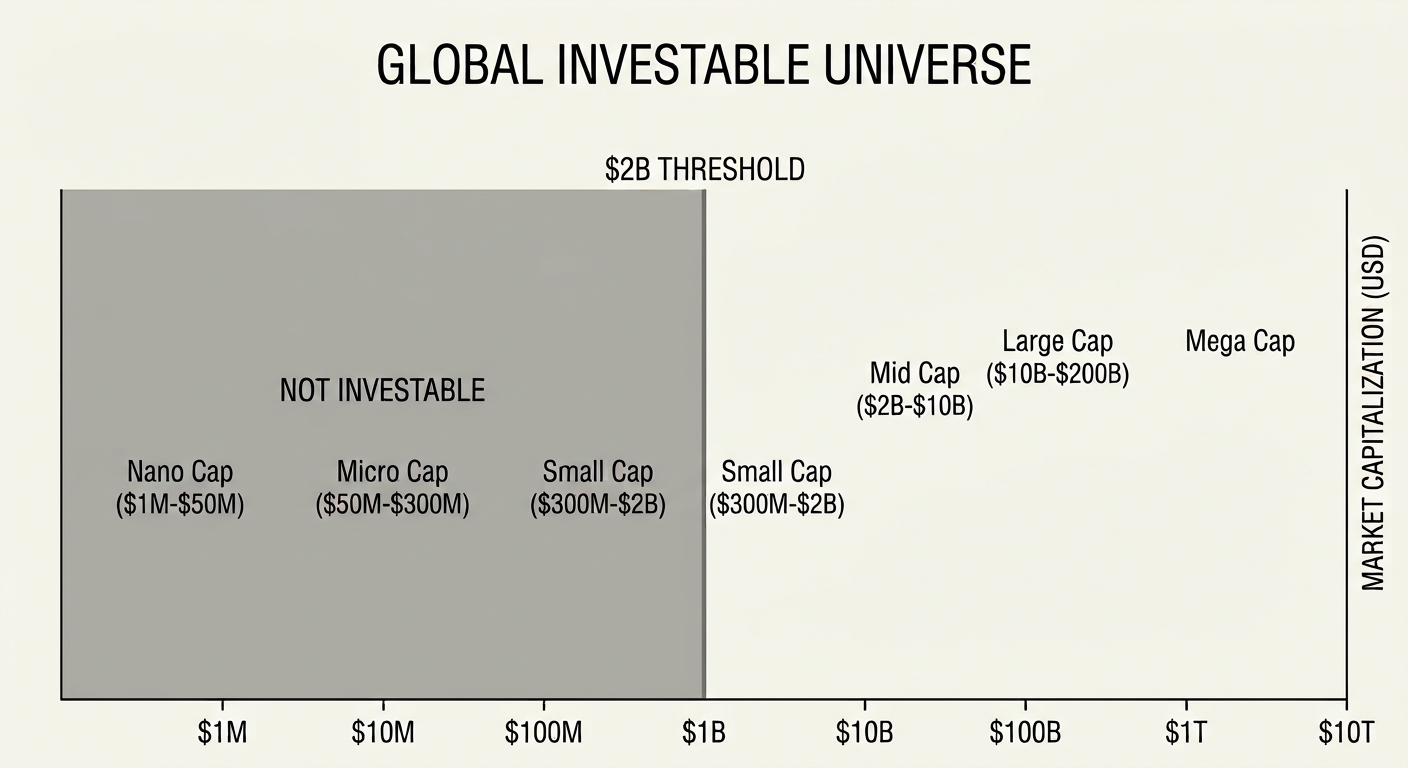
In reality, it often ends up being bigger than this. Funds prefer to have more room to run and dislike the baggage that comes with owning a significant percentage of outstanding shares.
The takeaway is the following:
As a fund grows, its universe of investable assets shrinks.
Growing funds are forced to become more index-like because the basket of investable assets mimic that of the S&P 500 over time.
This decreases any chance of outperformance, or alpha, for investors in these funds.
D. Bureaucracy
Another key, tangible difference is reflected in the distribution of key stakeholders involved in a fund's capital allocation process.
Each of these stakeholders presents another roadblock, or a point of contention, before a decision can be reached.
The different parties involved may include:
-
The research analyst(s)
-
The portfolio manager(s)
-
The trade executer
-
The Chief Investment Officer (CIO)
-
The investment committee
And each one plays a different part in the process.
Below is an illustrative demonstration:
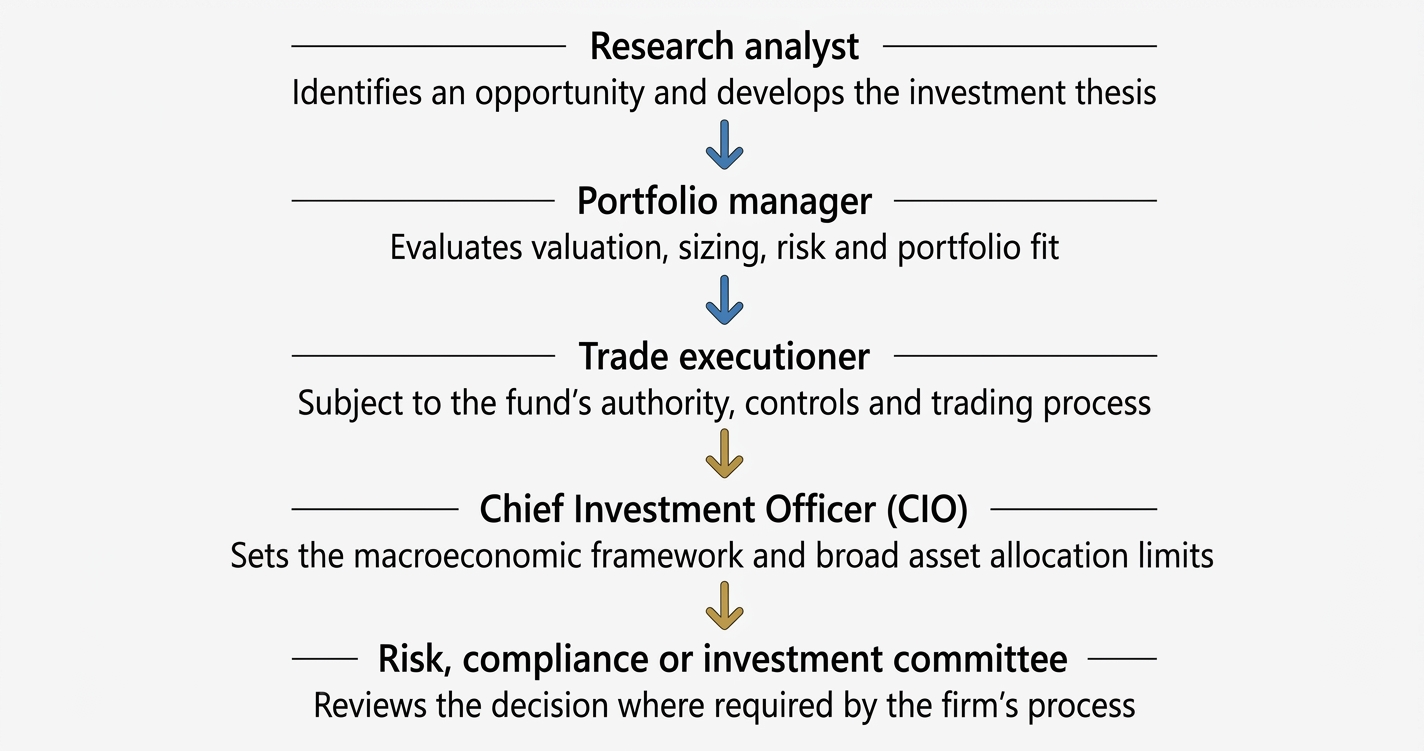
Typically, a research analyst is the one in the field turning over rocks to find investment opportunities for the fund.
Once a key target is found, the analyst will perform due diligence, create a financial model, and compile it into a presentation.
The analyst will typically present to a team comprised of other analysts and portfolio managers, where some teams even have dedicated "devil's advocate" roles to try and poke holes in the pitch.
"Our FMAIC seeks to challenge the risk of groupthink. The committee assigns one person the role of "devil's advocate" to challenge the group's views" - Allianz Global Investors
If it passes this initial filter, the idea will lie in the hands of the Portfolio Manager, who weighs the position against their current portfolio, strategic goals, and risk exposure.
The Portfolio Manager can then deny, modify, or approve the trade proposal.
If approved, the Portfolio Manager then shuffles the trade to a Specialized Trade Executioner who actually makes the buy or sell in the portfolio.
Even though these three parties are usually able to execute trades amongst themselves, other parties become involved in the overall portfolio strategy and decision-making process at times.
These two parties include the Chief Investment Officer (CIO) and the Investment Committee.
The CIO oversees the entire investment department.
They rarely act as a secondary approval layer for analyst ideas unless they are also a co-PM on that specific mandate.
For the most part, they're involved in managing allocation limits, fund goals, and risk factors.
The investment committee, similarly, might not review every trade, but they certainly can be involved for the major ones, and are called upon periodically for group performance.
The committee generally reviews decisions, ensures adherence to mandates, and validates stress-test scenarios.
And this brings us to our overarching finding:
Institutional investment decisions may require more than one meeting, revisions based on the feedback from several parties, and multiple handoffs before the trade can be made.
That's a lot of bureaucracy.
And how does this impact decision speed in these funds?
Well... things become... slow.
E. Bringing it All Together
So what's the take away after all of this?
It's clear that funds operate very differently from individual investors.
They are burdened by:
-
Personal incentives that misalign the interests of fund managers versus investors
-
Strict rules and guidelines that determine how they can allocate capital
-
The inability to invest in small assets relative to fund size
-
Excess bureaucracy which impacts decision-making speed
The worst part is, these rules and dynamics are very hard to change.
They are ingrained in the cultures and workflows of these funds.
The end result?
Underperformance.
Just over 8% of active large-cap U.S. equity stock funds have outperformed the S&P 500 over the last 20 years, according to a 2025 article.
Not only are you subject to this underperformance, but you do it all for a hefty price.
Money managers are expensive.
But you know what's not expensive?
Managing your own money.
Controlling your own finances not only saves you dollars, but also allows you to learn a whole lot in the process.
You know what else? Investors like you and me are not subject to rules like these funds.
We are free to change our investment strategy at a moment's notice, without adhering to strict guardrails or checking with committee members or investors for approval.
This gives us the freedom to take advantage of more lucrative opportunities, whereas institutions may not.
Asymmetric investments now become a source of strength for us as individual investors, rather than a constraint.
We have the flexibility to pursue opportunities that larger institutions may be unable or unwilling to consider.
While it doesn't guarantee outperformance, this flexibility offers us the opportunity to outperform the market in a way that Wall Street cannot.
In other words, David can beat Goliath.
More soon,
Blake at Vassant