Rollins: Is The -50% Drawdown Overblown?

Rollins is the definition of a boring business.
They provide pest control services to residential and commercial customers primarily in the United States to over 2.8m residential and commercial customers from more than 800 company-owned and franchised locations.
Pest control is shorthand for the following services:
- Assessing the current state of the customer to determine which conditions are favorable for pests
- Addressing current infestations
- Preventative maintenance to stop future infestations from occurring
So whenever you have a bug problem, you are likely to call one of Rollins’ subsidiaries. They own many recognizable brands such as Orkin, HomeTeam, Northwest, Fox Pest Control, Critter Control, Clark, Safeguard and others.
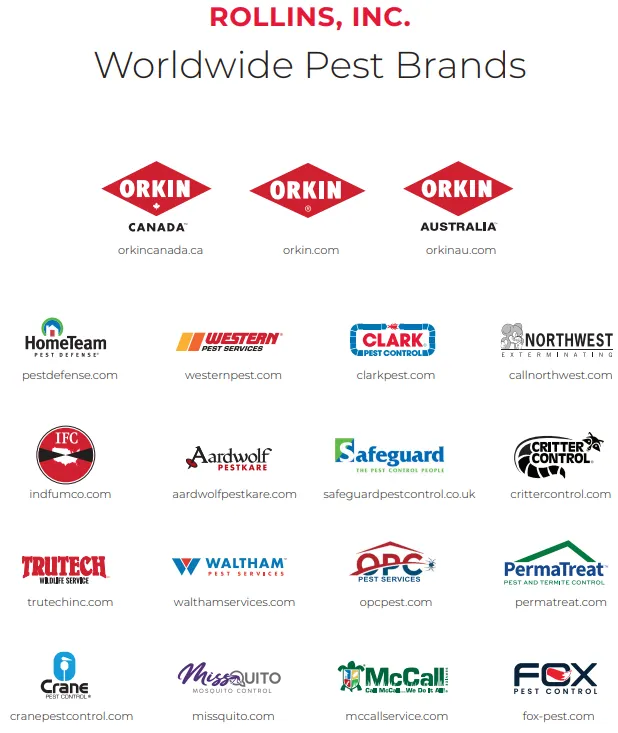
Source: Rollins 2024 10K
Rollins is actually the parent company that controls these subsidiaries. They operate an acquisition model where they roll-up many of these smaller pest extermination brands in the U.S. (and internationally, to a smaller degree) to serve as a large, decentralized operator across the U.S.
Their business is split between 4 different segments:
- Residential (~45% of revenue): Rollins provides pest control services to protect residential communities/homes from mosquitoes, spiders, ants, bed bugs, and more.
- Commercial (~33% of revenue): Rollins instead serves businesses in the hospitality, healthcare, and food processing industries to protect against the same bugs.
- Termite & Ancillary (~21% of revenue): Services termite outbreaks and assists with preventative maintenance. Ancillary services include wildlife exclusion, crawlspace encapsulation and moisture remediation, and insulation. This segment applies to both residential and commercial customers.
Now that we know the basics, let’s understand what’s going on with the business right now.
The company ran into some turbulence starting in May 2026: organic lead volumes started to decline for the residential business. This softness persisted throughout the season and continues today.
“Then you move forward into, as we talk about current environment, this softness has really remained with us this entire time. This extra softness in the leads, where we're talking about double-digit lead declines instead of 4% or 5% lead decline” - Jerry Gahlhoff, U.S. All-Stars Conference (Sept 2026)
In other words, residential customers are reaching out to Rollins brands less frequently for pest control services.
One might consider whether this softness was due to cyclicality, where lower income residential customers might go with cheaper options. But this wasn’t the case:
“We don't think that's a lot because we tested, we looked at our income bands, we looked at lead volume by income band, and you would have suspected that the lower income bands may have seen steeper reduction in lead volume. That really wasn't the case. It was proportional across all of our income bands that we're aware of.” - Jerry Gahlhoff, U.S. All-Stars Conference (Sept 2026)
There are other factors to consider as well.
For one, there are fewer inbound calls if pests do not invade homes, such as when a winter storm blows by or if there is an abnormally cold season.
And it seems from management commentary some of this may be happening.
But what’s really interesting is that this softness persisted throughout the summer, which is the season most favorable for pests. Warmer temperatures and longer days allow these bugs to breed more frequently and metabolize foods quicker, prompting a pretty powerful reinforcing cycle. This is why large infestations can occur in the summertime in a matter of hours, if not days.
So this indicates there is another dynamic at play.
What if there was worse customer discovery for Rollins brands? What if, rather than favoring nationally-recognized brands, they are instead reaching out to cheaper, hyperlocal pest control providers?
This may be happening.
On May 19, 2026, Google shifted their search algorithms to present the AI Overview as their default search result at the top of the page.
Coincidentally, this is precisely when Rollins started to see a change in inbound calls:
“May 19th is when they went to the AI Overview as default search, and that's also when we started to see that gap really begin to widen as well. Certainly, if I had to name it, I would say certainly, at least 50%-60% of what we experience is probably related to this shift in the LLMs, and there's probably also a few other factors that are involved there, probably at a much less level” - Jerry Gahlhoff, U.S. All-Stars Conference (Sept 2026)
Residential customers may be opting to go with the cheaper or more local brand rather than organic outreach to a brand name such as Orkin.
As a long-term investor amidst this large drawdown, the question now becomes…
Do the new market dynamics hurt the long-term durability of the business?
To directly address this question, let’s first separate product/demand versus competitive advantages.
First, the demand.
Pests still exist, they infiltrate homes, and people do not want them around.
The demand is not changing.
The resolution?
Pest control services. Companies like Orkin send field service technicians onsite to apply pesticides to mitigate current outbreaks and prevent future ones.
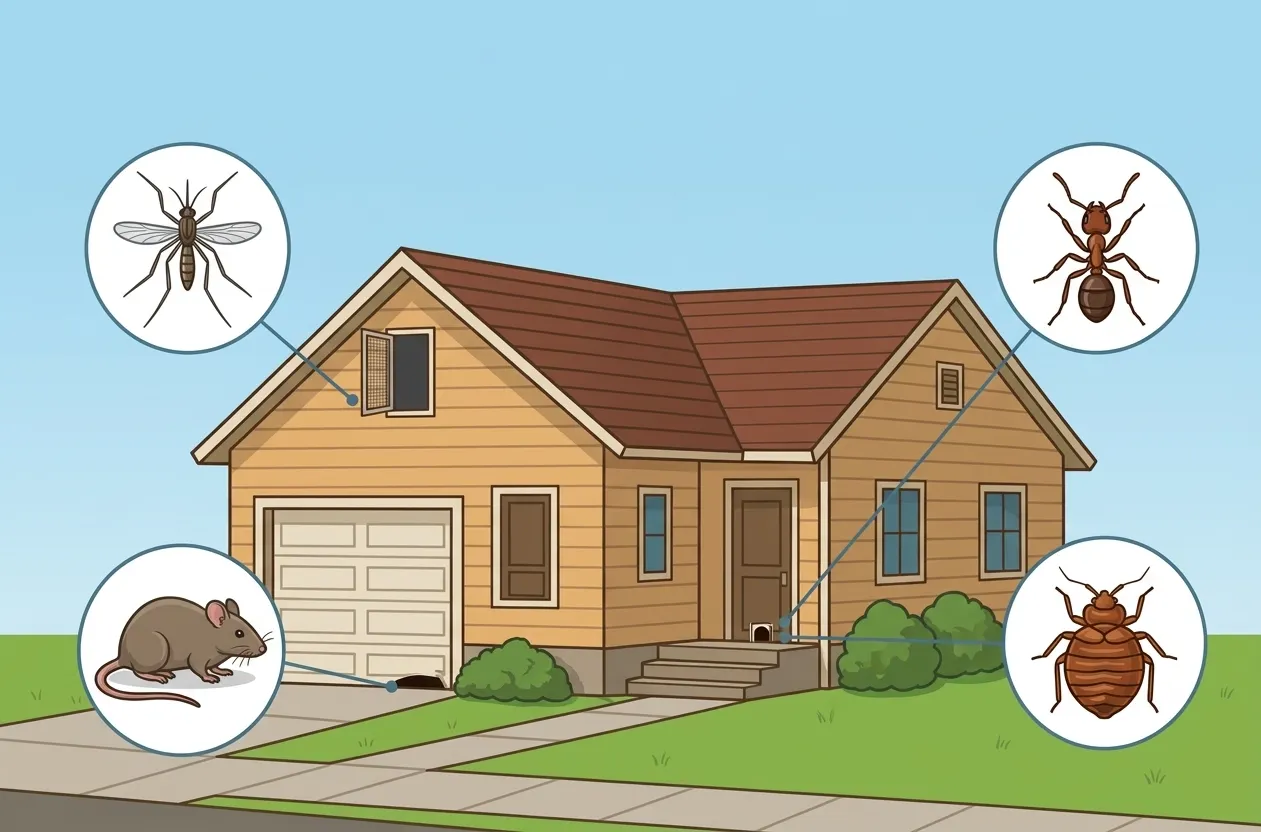
And while the actual chemical composition of pesticides may change slightly depending on environmental sustainability concerns or pesticide effectiveness, the general preventative maintenance is the same.
Just a quick note on how Rollins brands are facing this issue:
“At the core of our pest control strategy is the integrated pest management (IPM) methodology— a comprehensive approach designed to effectively manage pest populations while minimizing environmental impact. This method is guided by principles, including accurate pest identification for targeted treatments, regular monitoring, and thorough inspections. These practices enable us to assess and refine our strategies, prioritizing non-chemical solutions whenever feasible. When chemical measures are required, we apply them with precision to reduce unnecessary exposure and support safety” - Orkin Website
It’s safe to say Rollins subsidiaries are implementing the right protocols to keep up with changing regulatory frameworks and sustainability concerns.
The product (generally speaking) is not changing.
Rollins’ primary products, as a whole, generally experience little turnover due to technological innovation.
But what’s different (from our initial evidence) appears to be discoverability.
Residential customers may be changing their behavior during the initial outreach process. Rather than quoting from well-known and reliable brands such as Orkin, they may be searching for the fastest and cheapest option available.
There are many avenues Rollins can take advantage of to overcome this discoverability change.
Maybe this means arranging a different marketing spend on Google or optimizing search for different keywords to have a higher chance of appearing on the AI overview.
Or maybe it means using a more diverse digital acquisition strategy across not only Google, but other LLMs and other advertising platforms.
Rollins could also shift the strategy to acquire smaller businesses near denser, more populated areas that are benefiting from a new potential shift in customer behavior.
Whatever it is, this is one of those things where you have to trust management is trying everything in their power to work on it. Here’s some evidence:
“...we also began trying a lot of things. We tried it and this idea that you learn fast by failing fast, and we put a lot of things into place trying to make adjustments. Look, the reality is a lot of them didn't work. A lot of these adjustments that we attempted to make across June and July, they just flat didn't work. There were a couple that did, but that was rare. But we have to encourage our teams, you got to keep trying these things. You got to keep learning.” - Jerry Gahlhoff, U.S. All-Stars Conference (Sept 2026)
But here is a key risk to consider:
Pest Control is somewhat commoditized.
The same chemicals are used to kill the same bugs every year.
To the customer, in theory, few factors should then impact the decision-making process for choosing a vendor, with the primary being price. If this were true, brand advantage may erode due to this behavioral shift.
And there could be certain risks over time that Rollins faces regarding cost of customer acquisition via digital channels and organic customer growth.
For a business that is driven by operating leverage, this could be a legitimate concern over the short-term and should be considered thoughtfully before making an investment decision.
But I’d like to offer a different perspective.
The argument I’ll present is that Rollins has very carefully cultivated a unique culture built around customer service, shared missions, and personal development. And this culture serves as a standalone competitive advantage that directly supports the business’s long-term durability through more robust customer relationships and subtle pricing power.
With a stronger culture comes better employee retention to supplement stronger focus on customer relationships, which reinforces longer contract periods (higher recurring revenue) and subtle pricing power.
A qualitative advantage of this sort will drive continued share price performance over the long-run.
A. Cultural Goals & Strategic Objectives
First, a primer.
Why is culture so important?
Culture defines investment results over the long-run. It directly impacts the cohesiveness of the employees’ contributions to shared goals, the quality of execution, and the morale felt by each individual.

Source: MorningStar
So as long-term investors, culture actually should be one of the top priorities of analysis, even over earnings expectations and short-term cyclical trends.
By focusing on highly competent companies with carefully curated cultures, you naturally down-select your investable universe to companies more likely to survive for longer time periods.
Now to Rollins.
They have a very distinct culture. One made clear if you read any of their 10K reports or investor presentations. Here are their strategic objectives:
- People First: “We promote a people first mindset that prioritizes the well-being and development of the individual, as well as our collective team, in all aspects of our business. To provide our customers with the best customer experience, we must focus on cultivating our position as the employer of choice in our industry. This means not only investing in competitive wages and benefits, but also providing tools, training and development opportunities that drive a high level of teammate engagement.” - 2024 10K
- Customer Loyalty: “We focus on creating the best customer experience that will enable a loyal customer base and in turn reduce the amount of churn across our customer base. This starts with our people and the interactions they have with our customers. By focusing on this key objective, we expect it to enable growth that will outpace our market growth.” - 2024 10K
- Operational Efficiency: “As a complement to our growth mindset, our dedication to continuous improvement and operational efficiency is another key tenet of our strategy and culture. We approach our operations from the perspective that everything we do can be improved upon. We are constantly striving to improve our service levels by optimizing our business model and modernizing our business” - 2024 10K
Notice how their first objective has nothing to do with shareholders or product development? It has to do with their people.
Rollins has built its business over many decades not by prioritizing short-term growth, but instead building something that can withstand any economic depression.
Rollins is very clear about how they prioritize their people.
For one, management calls their employees teammates, rather than employees, on earnings calls and all relevant company documents.
While such a small gesture, such a thing can do wonders for employee morale and collaborative execution.
People feel as if they’re part of a team, rather than a slave for a greedy corporate entity.

Source: Quire
B. Professional Training & Development
This is one of the biggest cultural advantages of the Rollins business. They offer robust training programs to help employees rise through the ranks and earn more over the course of their career.
“We believe one of the largest contributors to our Company’s success is the quality of our people. Attracting, developing and retaining high-quality talent is the primary objective of our human capital management strategy. The development and retention of high-quality talent enables a better customer experience and improved customer retention.” - 2024 10K
One of the primary methods they aim to develop their talent is through their branded Region Manager Development Program (RMDP).
This program is a comprehensive leadership development program supports primarily mid-level managers, but also aspiring lower level managers, who lead individual groups or departments.
It is a 12-month program with the following perks:
- facilitator-led training
- executive and peer mentoring
- immersive field learning experiences
- 360-degree assessments
- a 6-month executive coaching engagement
- supported individualized development plans
“Since the program was established in 2018, we have graduated a total of 112 senior leaders in six different RMDP classes with continued successes” - 2024 10K
Programs like these build not only experience, but character and trust within the Rollins business units. These factors directly impact retention, know-how & expertise, and quality of execution.
Another way they built employee experience and foster professional development is through their centralized Rollins Learning Center located in Atlanta, Georgia.
If the individual business units are able to execute better, this contributes more favorably towards the bottom line for Rollins.
This is literally a 26,000+ square foot facility with simulated outdoor environments for pest control experience and classrooms for applied learnings, which provide exposure to trainee, manager development, commercial account management, and residential sales inspector roles.
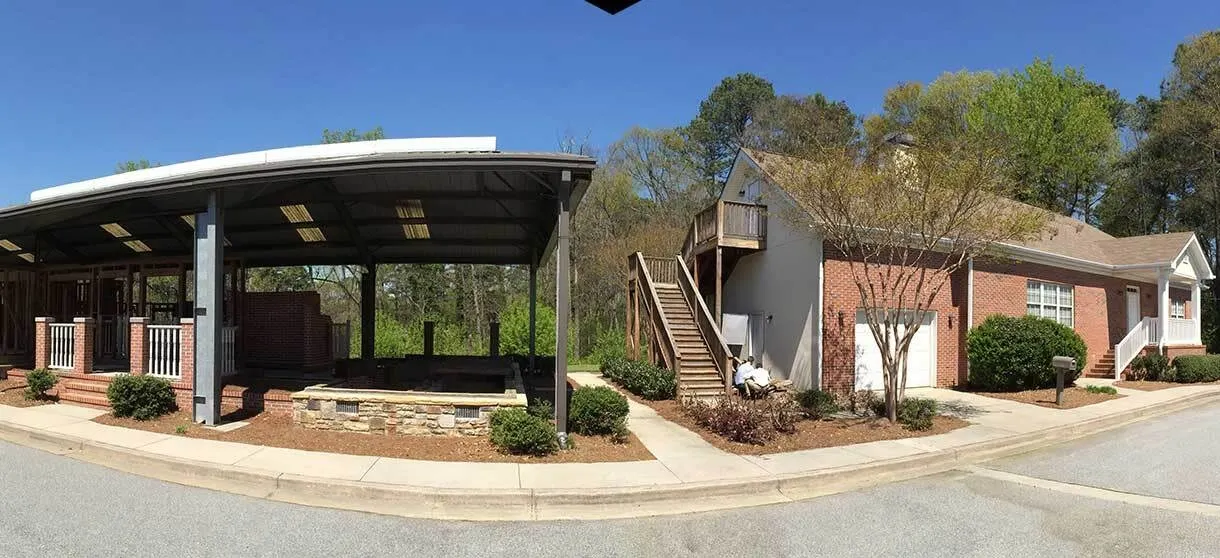
Source: Orkin Website
If employees are not able to attend in person, they have remote access to on-demand lessons at any time.
Think of it as Rollins University!
As a whole, Rollins invests over $5 million in training programs annually.
The direct consequence of these investments? Recognition from Training magazine as one of the Top 125 U.S. Training Companies 17 times in the past 22 years (as of 2024).
The direct benefit? Prospective employees, driven by motivation and passion for growth, are more likely to accept and retain a position at Rollins.
Higher quality employees comprise a higher quality business.
C. Health and Wellbeing
Rollins cares highly about the safety of their employees.
Working at Rollins means frequent driving, chemical exposure, and direct interaction with disease-ridden pests on a daily basis. Prioritizing health is very important to not only reduce claims and lawsuits, but to make employees feel safe on the job.
To address these concerns, they invest in safety tools and training to improve employee wellbeing on the road and on the job.
As a result of these investments, injury and collision rates have both dropped around 20% since 2022:
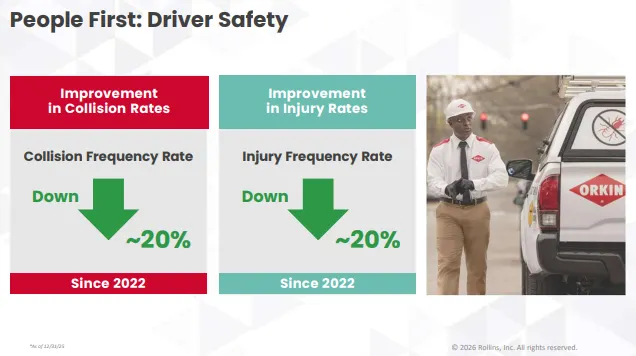
Source: 2026 Investor Presentation
In addition, the company invests tangible dollars in the physical wellbeing of their employees.
In 2022, Rollins began offering no-cost primary care to their teammates at their Atlanta Support facility through their partnership with Everside Health.
With how expensive health insurance and hospital visits are in this day and age, driven by rising medical costs, this is a major value add.
Personally, I have never heard of such a perk. If I was a local in the area, I would definitely consider taking advantage of this.
By directly improving the health of their employees, both physically and emotionally, Rollins cultivates a more positive cultural mindset and also directly reduces the likelihood of project disruption due to medical leaves of absence.
Smoother visit completion timelines translate to improved bottom-line numbers.
D. Community Involvement & A Culture of Service
Simon Kold wrote a book in 2024 titled On the Hunt for Great Companies: An Investor's Guide to Evaluating Business Quality and Durability.
In this book, he describes how companies often drive the best long-term shareholder returns by providing value for all stakeholders (employees, customers, suppliers, and society), not just shareholders.
As a result of this argument, it is a decent idea to take a second to review how the company treats society at large.
We can ask the following questions:
- Does the company provide or take?
- How does the company benefit the communities around them?
- Does value creation lead to societal pushback?
As for Rollins, while I’ll be the first to admit their service is literally killing bugs, this is a necessary requirement for many industries where health is of utmost importance (food service and healthcare) and highly regulated.
Not to mention that people prefer to sleep in a bed without bugs in it.
So we will give that one a pass for now.
Regarding societal impact, things are much more positive:
“Our brands work closely with their local communities to create an impact through outreach, volunteerism, and donations. Our overarching goal is to create a significant impact in local communities over an extended period of time.” - 2024 10K
Here are some examples:
- Rollins themselves has partnered with the United Way of Greater Atlanta to support their community by hosting rallies, golf tournaments, contests, and silent auctions to raise funds. They’ve contributed approximately $1 million annually for each of the past five years. Rollins ranked #8 in the top 25 corporate contributors in both 2024 and 2023, compared to ranking #7 and #9 in 2022 and 2021, respectively.
- Orkin created the Mosquitoes Don’t Deserve a Drop program, which donates $25 for every new mosquito service purchased during mosquito season, up to $250,000, on top of pop-up blood drives. They also operate the OrkinServes volunteer program, donating 14,000 hours of community service over 700+ events.
- Northwest Exterminating runs “The Good Deed Team” - donating 3,000 homeless care bags, 2,160 backpacks, ~13,000 first responder meals, ~4,300 bilingual books, and ~4,200 gallons of laundry detergent.
- HomeTeam Pest Defense contributes towards the Servant Heart Good Works Program and Support Our Troops initiatives. They’ve donated over 10,000 pounds of food, $10,000+ of gift cards, and benefited over 20 organizations.
In fact, there are full time employees responsible for leading these community outreach initiatives across the Rollins subsidiaries.
Not only do they talk about benefiting the community, but they have real numbers to back it up.
E. Putting it All Together
Culture defines company performance over 5-10 year periods.
The stronger the culture, the better chance at sustainable returns.
By putting so much time and effort into their people and culture, Rollins has cultivated tangible advantages over their primary competitors.
Employee morale, career development, health & wellbeing, and community service.
It all matters.
And it’s driving real differences.
According to various online sources, employee retention rates are “over 90%” (as of 2023) at Rollins brands while their primary competitor, Rentokil, has group employee retention rates of around 84% as of 2023.
In fact, Rollins further improved first-year teammate retention by 12% in 2026.
This translates into a direct cost savings. By reducing turnover and increasing retention, Rollins keeps more of their bottom line that would have otherwise gone into retraining new employees. According to Ken Krause, the CFO of Rollins:
“By reducing hiring, by improving retention of just 1,000 teammates, that would represent a savings of almost $15 million” - 2026 Investor Day
In addition, higher employee retention generates a culture of higher quality execution as a result of fewer project delays.
One of the main arguments of this article is that heightened level of execution translates into more satisfied customers and better customer relationships, which enables subtle pricing power on top of reduced customer churn.
All of these factors are visible in higher margins across the board for Rollins ($ROL) compared to Rentokil ($RTO):

Source: Fiscal.AI
Not only does Rollins have a structurally more profitable business as a result, but it also grows more quickly. Over the past 5 years:
- ROL 5Y FCF/share: 7.3% CAGR
- RTO 5Y FCF/share: 3% CAGR
Pricing power and structural advantages can be derived from culture.
Just take this quote from the CEO:
“That is exactly why we have to be the best service company in the world. Because if you have relationships with your customers, if you are serving customers the right way, and you build loyalty with your clients, these discussions about price over a few dollars on a service never come into play if those relationships are there.
The best way we can, as a company, prevent ourselves from becoming commoditized and this being about price is exactly what we were just talking about. It is about our people. It is about the work that we do and the relationships that they build. It is really hard for a customer to fire Will if Will is their technician or their Orkin Pro. It is really hard for them to do that over $3 or $4.” - 2026 U.S. All Stars Conference
And this is precisely the difference that will enable Rollins to succeed over the long run.
Using the right combination of strategic discovery will help them regain organic growth through new leads, and existing customers will retain those contracts for longer and at higher price points due to their higher quality execution.
F. Valuation
Let’s put this in the perspective of today’s price.
For this valuation model, I am using TTM Free Cash Flow at $619M and a discount rate of ~7% (lower due to higher business predictability; calculated from a ~5% risk free rate, a 0.8 beta and a ~2.5% market risk premium).
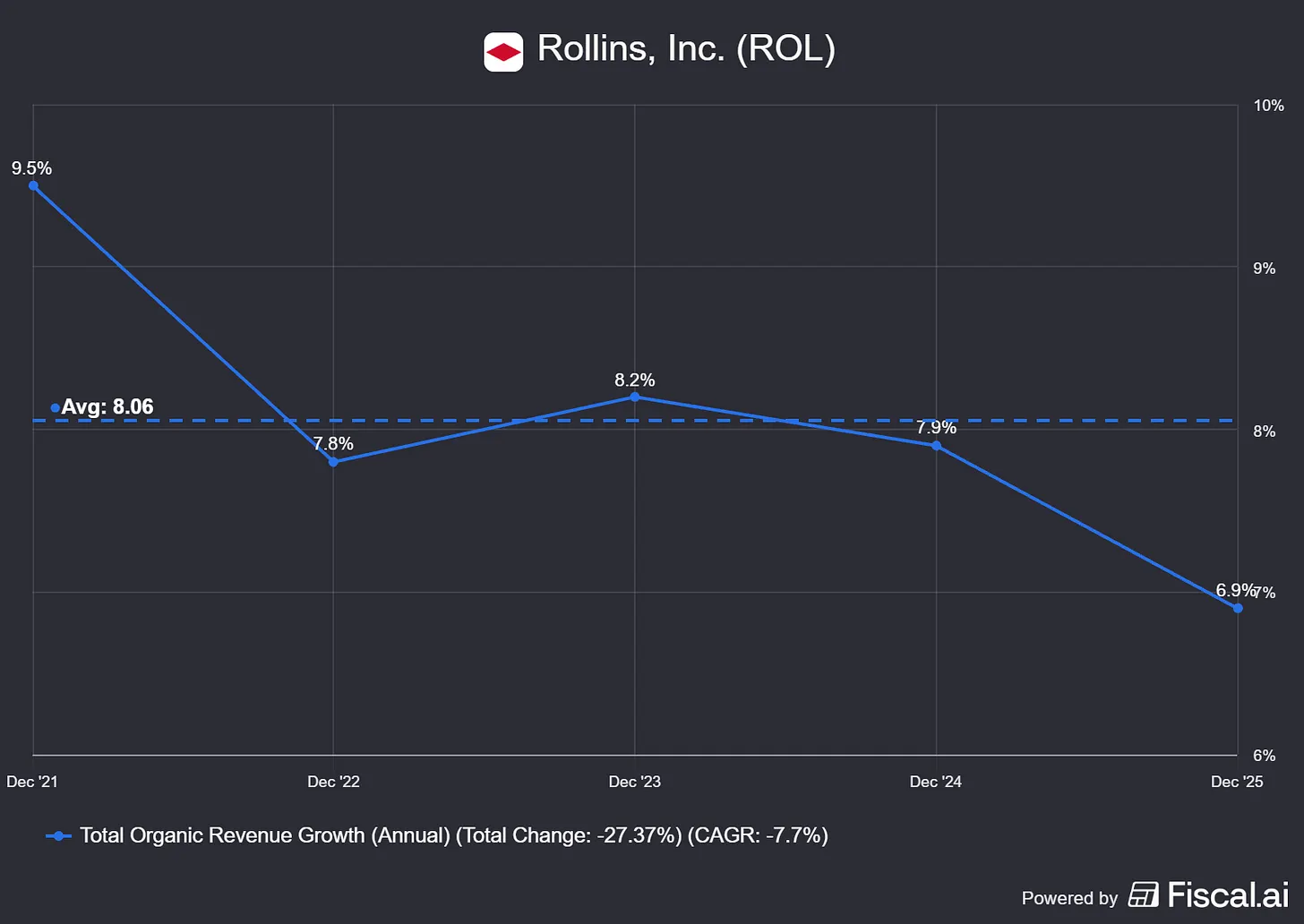
For growth rates, Rollins has historically grown at 8% organic growth rate over the past 5 years:
Source: Fiscal.AI
Now in the most recent quarter, organic residential growth dropped to 3.6% YoY compared to 4.9% in the previous year. Assuming this dropped to zero (to be conservative), residential would grow at 3% per year driven solely by acquisitions. Considering the lower residential growth, this would result in a weighted average organic growth rate (across residential, commercial, termite, and ancillary) of around 4.9% going forward, assuming 2025 growth rates of the other segments.
In 2025, inorganic growth contributed 4.1% to revenue, bringing us to 9% revenue growth going forward.
Let’s assume no margin expansion from here. Let’s also price in deterioration of growth as time passes, and assume the business dies after 20 years (to add conservatism):
This brings us to the following growth rates:
- Year 1-5: 9%
- Year 6-10: 8%
- Year 11-20: 6%
- No growth thereafter (business ceases to exist)
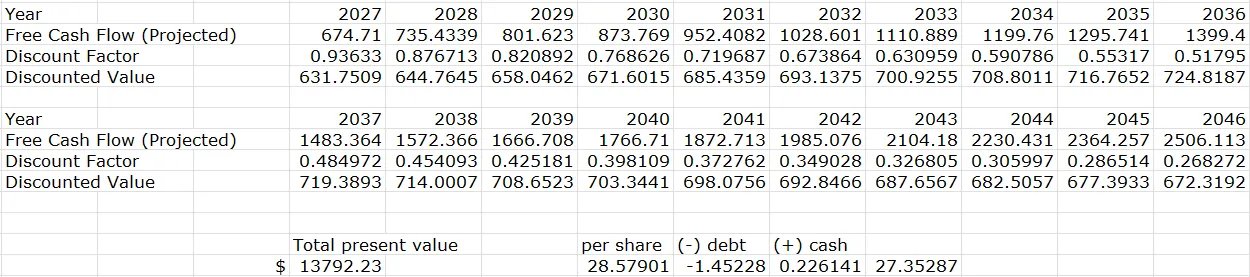
From this value, I subtract outstanding debt (around $700M) and add back free cash (around $109M). I arrive at a fair value of $27.35, or around ~10% below today’s price of around $30.
If we instead use growth rates of 9% for years 1-5, 7% for years 6-10, and then 5% for years 11-20, then we achieve a conservative valuation of $25.81, or around ~15% below today’s price of around $30.
Keep in mind, I believe these are pretty conservative. Rollins is much more likely to live past year 20 given the stalwart-like nature of the industry.
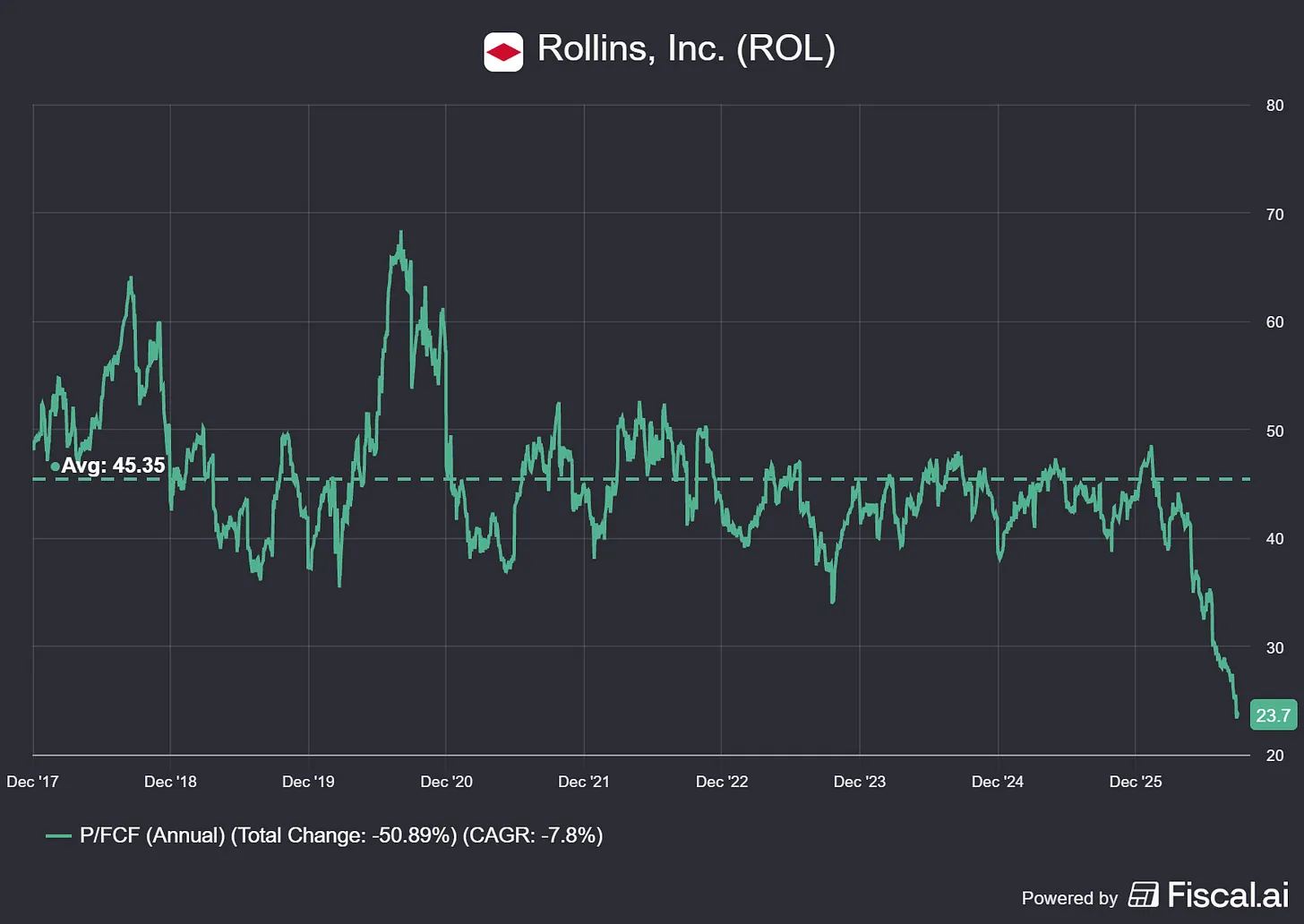
Now let’s create a valuation from a return perspective going forward. ROL has traded at a 45 P/FCF on average over the last 10 years.
Source: Fiscal.AI
Let’s assume the business rerates to 30 P/FCF to reflect the changes described in this piece, the same free cash flow growth as year 1-5 above, plus a 2% dividend yield and no buybacks (even though they are doing some now). If we assume the business trades at 25 P/FCF (roughly at current level) in 5 years, we earn a 12.2% CAGR on Rollins from today’s price (around $30).
It’s up to you how you might want to reconfigure the specific metrics used in this valuation, but it seems Rollins has come down to a valuation close to a realistic fair value.
Whether you are willing to pay a “fair” price for quality is completely your decision.
Hopefully this analysis has shed some light on its quality, in a perspective maybe you haven’t seen before.
More soon,
Blake at Vassant
