How to Build An Impenetrable Investment Thesis

Investing today presents a strange paradox: it has never been easier to trade, yet it also has never been better to be a long-term investor.
But how?
For one, information has never travelled quicker.
In the 1800s, news traveled via ships and horseback, taking weeks or months until delivery before the invention of the electric telegraph, compressing the delivery time into minutes.
Throughout the 1900s, radio and 24-hour cable television turned news consumption into a real-time oadcast.
Today, smartphone networks and social media platforms deliver breaking news globally in milliseconds, making information distribution nearly instantaneous (and more frequent).
On top of this, there is a lower signal to noise ratio.
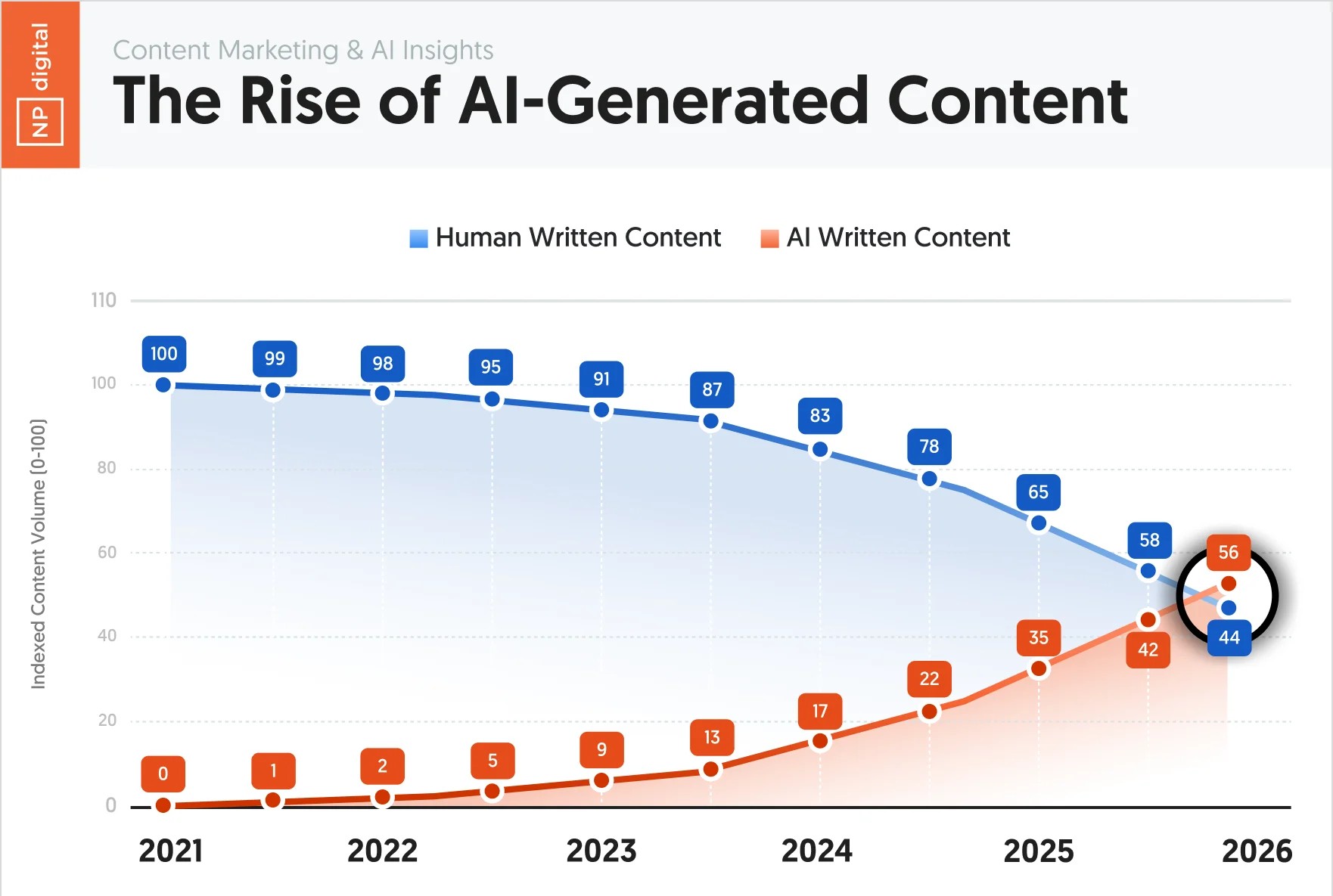
As the incremental cost of creating content drops to zero, the web is being flooded with AI-generated content.
Much of this content is meant to click-farm rather than generate insightful commentary.
Source: NP Digital
AI-generated content now outnumbers human-created content.
Kinda surreal, isn’t it?
So how does this impact investors?
The increased production, availability, and distribution of information has given the market more opportunities to reprice stocks with new news.
This has led to an increase in short-term volatility of stocks.
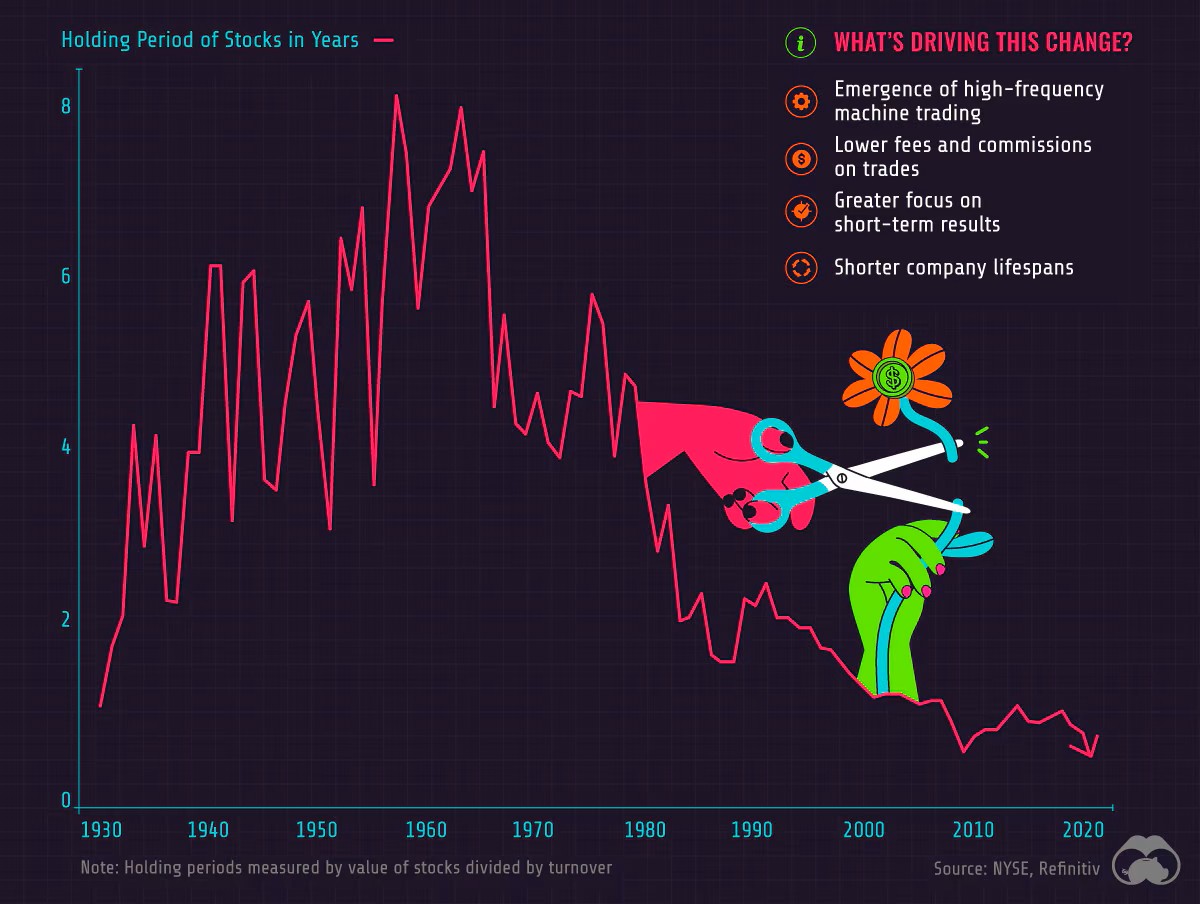
Heightened volatility and greater access to investment trading platforms have collectively fostered a short-term trading culture, pushing down the average investment time from over 8 years to under 6 months.
Just take a look at this data from the World Economic Forum in 2021.
Source: The World Economic Forum
Directly from this article is the following quote:
“As of June 2020, the average holding period of shares was just 5.5 months.”
Long-term investing is no longer the norm.
But as contrarian investors have learned, this is exactly how we can find our edge.
Let’s dive deeper.
John Huber, the founder and portfolio manager of Saber Capital Management, wrote an article called “What Is Your Investing Edge?” in 2017.
His primary takeaway?
Individual investors and professional capital management groups are using tools at their disposal to gain an informational edge to predict next quarter’s or next year’s results.
They hope to gain more information than is generally available to capture upside (or downside) surprises when corporate earnings hit.
A few months prior to writing the article, Huber recalled a paper reporting on how hedge funds were paying for satellite imagery to gain better insights into crop yields to predict how lucrative the harvest would be for that year.
The clear conclusion to me?
The market, in aggregate, is becoming more short-term focused. This increases competition in the smaller timeframes, reducing the likelihood of consistent outperformance using trading strategies.
So where does our edge lie?
Long-term focus.
Think about it… Satellite imagery of crop yields has nothing to do with long-term advantages of agricultural businesses.
As more investors compete to predict short-term earnings surprises, the market becomes increasingly proactive and reactive to information that has little relevance to long-term intrinsic value.
These hyper-volatile short-term movement can create extreme temporary mispricings, which serve as attractive entry prices for investors looking to purchase a stock, especially if they believe in the long-term vision of the company.
So if being contrarian and focusing on the long-term helps us realize our edge, what tools enable us to ignore the herd and define our own path?
The most important tool: Building a concrete thesis, and using that thesis throughout the duration of the holding period.
And that’s what today’s article is about.
1. Finding Information From The Source
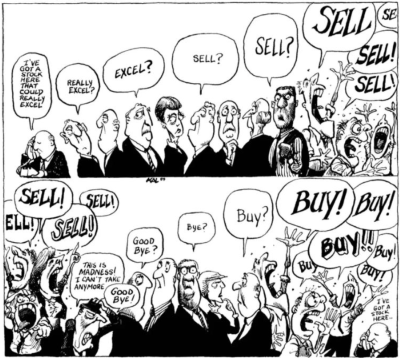
Investing can sometimes be like a game of telephone:
Source: LinkedIn
Information can be distorted, lost, or misinterpreted from the original 10-K, earnings call, or expert interview.
Also, information from second-hand analyses can often be misconstrued to fit a specific narrative.
If you read an article that is quite bullish on an investment, it is likely the writer sought out data to support their thesis. Bias is a real thing!
- Side note: Although I am proud to recognize that many of today’s stock analysis creators (especially on Substack) are quite well-rounded in their approach to investment analysis and do a pretty good job of balancing the upsides with risks.
But another limitation of reading second-hand analyses is the contextual risk.
Writers select and isolate information they feel is important.
They use it in their write-ups to create a story or narrative to align with their publication theme.
Hell, even I do it!
Some piece of context may be irrelevant to their narrative but crucial to your thesis.
If you relied solely on this third-party analysis, you would have had a misinformed research process.
It is incredibly important to start evaluating a potential investment with a blank slate, without any biases influencing your opinion from the get-go.
The most effective way to create a bias-free thesis is to digest the information directly from the source.
This includes:
a. Reports: 10-Ks and 10-Qs
A company’s annual and quarterly filings are some of the most valuable resources available to investors.
Company reports contain:
- the language management uses to describe the business
- the markets it operates in
- its competitive environment
- its accounting policies
- the risks it believes could affect future performance
The 10-K is especially useful because it forces management to explain the business in a structured format.
You can learn about the company’s operating segments, revenue sources, customers, suppliers, competition, capital expenditures, debt obligations, and the way management evaluates performance.
The accounting footnotes can be equally important.
Sometimes the most valuable information is buried below the headlines.
This report is especially useful because it also outlines the negatives.
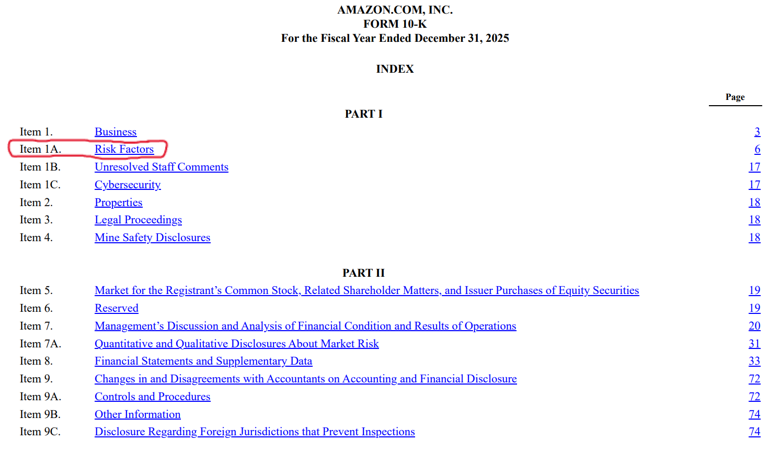
In addition, by law, every 10K report MUST disclose the material risks facing the business, and these risk factors are located in Item 1A of Part I:
Source: Amazon 2026 10K
Consider this:
- Are margins improving because the business is becoming more efficient, or because of a temporary accounting benefit?
- Is free cash flow strong because the business is generating more cash, or because working capital temporarily moved in its favor?
- Are share-based compensation, acquisitions, or capitalized expenses changing the way reported earnings should be interpreted?
These are the types of questions that help you truly understand a business.
A YouTube video usually does not suffice for this analysis.
b. Investor Slides: Presentations From the Company
Investor presentations are another excellent source of information because they often provide a more visual explanation of how management views the business and its opportunity.
They may include:
- Market share data
- Revenue and margin eakdowns
- Customer segmentation
- Geographic exposure
- Long-term financial targets
- Industry growth estimates
- Competitive positioning
- Capital allocation priorities
Investor slides often provide context that is difficult to find in standard financial statements or for free in second-hand reports online.
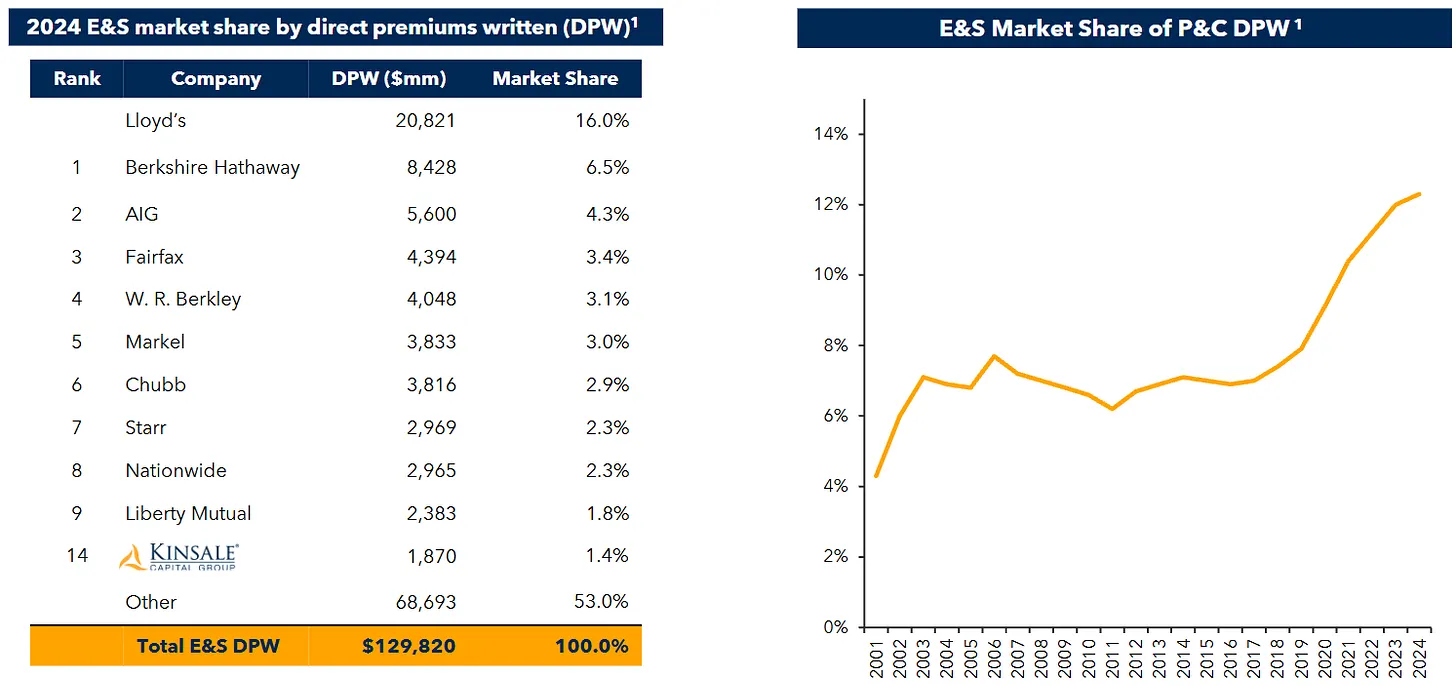
A 10-K may tell you how much revenue a company generated, while an investor presentation may help explain where that revenue came from, how it sizes up against the most relevant competitors, and that revenue translates to market share over time.
Take Kinsale Capital’s Investor Slides from 2026, which include a summary of market share fluctuations since 2001 alongside a eakdown of current competitors in their specific sub-industry:
Source: Kinsale Capital Featured Presentation
Finding this information second-hand would usually be paywalled or generalized without the context of each player and the change of market share over time.
Investor slides are free!
c. Earnings Calls: Listening to Management Speak
Earnings calls are where you can hear management explain the numbers and, perhaps more importantly, respond to questions they were not prepared for.
The introductory remarks are useful, but they are usually polished.
You would have a difficult time finding a management team who does not read a script during this initial phase.
Management knows what it wants to communicate.
The Q&A session is the better test of how they communicate and spin up responses in the moment.
- How does the CEO respond when an analyst challenges an assumption?
- Do they directly answer the question, or beat around the bush?
- Do they acknowledge mistakes?
- Are they willing to discuss weaknesses in the business, or do they only focus on the positive developments?
- What metrics do they choose to emphasize?
- Do they consistently speak about the same long-term priorities, or does the narrative change every quarter?
You can learn a lot about management by listening to how they communicate when the conversation moves outside of their prepared script.
Let’s take an example.
Medpace Holdings is run by August Troendle, the Founder, President, and CEO.

Source: Cincinnati Business Courier
In Feuary 2026, he hosted the Q4 2025 earnings call and these were his opening remarks:
“Good day, everyone. Cancellations were elevated again in Q4. Backlog cancellations, in absolute and percent terms, were the highest they've been in over a year. This resulted in a lower than anticipated net book-to-bill ratio of 1.04.” - August Troendle
Notice how he started the call with a negative?
That’s unusual.
Most executives fluff up their business by speaking highly about their competitive wins, growth, and execution.
But August is different. He owns around 21% of Medpace and has maintained at lease this shareholding level since founding the business in 1992.
It would be an understatement to say August is a clear long-term owner.
He couldn’t care less if the stock price dropped 10% after earnings because of some negative comments made during the earnings call.
In fact, he may even prefer it.
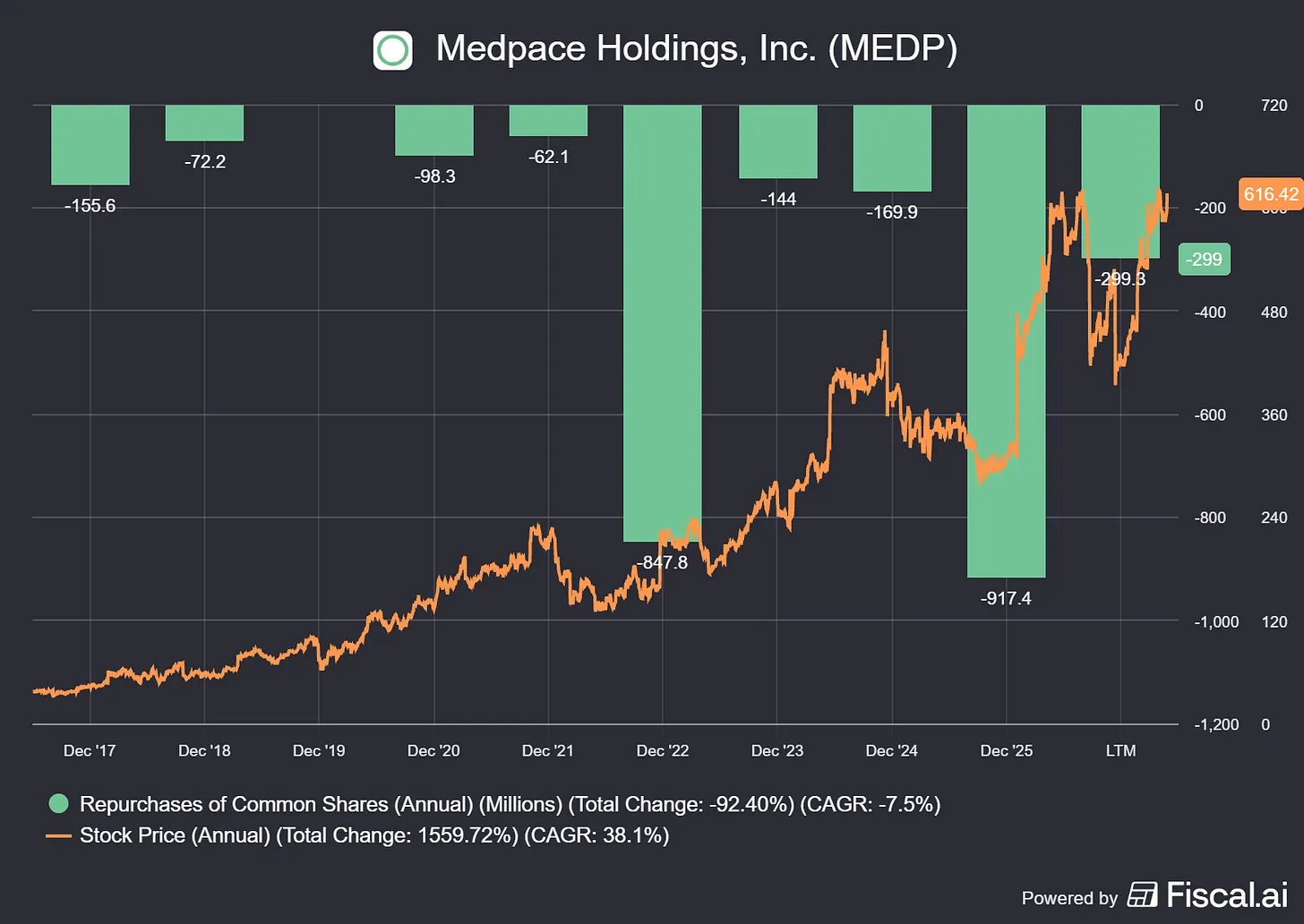
Notice how Medpace only buys back significant tranches of shares during periods of depressed prices, such as during 2022 and 2025:
Source: Fiscal.AI Dashboard
This is a clear example of true discipline in capital allocation.
It is precisely these kinds of leaders who speak frankly about the business and clearly communicate with shareholders that I prefer to partner with.
I have personally chosen to make investment decisions based on how “authentic” and honest CEOs are during the Q&A session with analysts.
2. Stress-Testing the Thesis
Once you’ve reviewed all information that you deem necessary to make an investment decision, you are best suited to form a thesis.
Ask yourself:
Do I want to own this company? If yes, why does the business deserve my capital?
Document the reasons, lay out your future expectations, and define when you want to add more or sell.
After making your own decision, it can actually be quite beneficial to stress-test your thesis using the opinions and analyses of others.
Warren Buffett and Charlie Munger were great investors, but what made them powerful was their minds put together.

Source: Daniel Scrivner
They each ought a different perspective to the table that made an investment rationale bulletproof.
Think about the way this works when more than one person can stress-test your thesis:
- One person may identify a great business with attractive economics.
- Another may recognize that the valuation is too high.
- A third may understand an industry-specific risk that neither of the first two considered.
Individually, each person may have a strong argument.
But putting those arguments together can create a more complete picture.
Holes or gaps in the initial research due to biases can be easily corrected.
After all, people love to tell you that you’re wrong.
This is why disagreement can be so valuable.
You are not looking for someone to simply agree with you. You are looking for someone who can identify the weaknesses in your thinking before you put your money where your mouth is.
A strong thesis should be able to survive a reasonable amount of criticism.
And if it can’t, that means it’s time to go back to the drawing board.
Find a friend or community member willing to talk with you. Bounce ideas off them. Tell them to find the holes in your argument. Be willing to accept criticism.
Another way you can do this is reviewing other opinion pieces online. This will come from the people that have researched the business independently from you. Maybe they will find something you’ve missed.
Here are some excellent Substack publications I highly recommend with fantastic research:
- Daniel's Deep Dive
- Alexander
- The Pursuit of Compounding
- Daan | InvestInsights
- Margin Valley Research
Personally, I have found that cross-referencing my research with other write-ups has made me more informed about the investment in question.
My positions have been more appropriately sized because of this stress-test.
Some examples of things I’ve found that I missed the first time:
- The company’s margins were being supported by temporary conditions.
- Became aware of competitors developing similar products.
- Their advantages were more penetrable than I initially realized.
You do not need to agree with every bear argument. But you should understand it.
If you cannot explain the strongest argument against your investment, you probably do not understand the investment as well as you think you do.
This is where reading both bullish and bearish analyses can be helpful.
A bullish article may help you understand the upside potential, while a bearish article may expose the assumptions required for that upside to occur and the risks to the downside.
Your job is not to choose the article you like more.
Your job is to determine which arguments are supported by the underlying facts.
And sometimes, the answer is somewhere in the middle.
A business can be exceptional and still be a poor investment at the wrong price.
A business can also be imperfect and still be an attractive investment if the market price adequately compensates for the risks.
The more independent perspectives you consider, the more likely you are to recognize where your thesis is strong and where it is fragile.
3. Keep an Open Mind and DROP YOUR EGO!
One of investors’ biggest obstacles, especially for those with robust experience, is themselves.
They have years or even decades of experience and have developed a sound investing framework that may have been well-suited to a particular time and place.
But markets change.
Industries, preferences, regulation, and consumer behavior are dynamic forces that shift how markets price assets over time.
The best investors understand they will never have a crystal ball, and they will never be right 100% of the time.

Source: Celebrity Net Worth
“In this business, if you're good, you're right six times out of ten. You're never going to be right nine times out of ten” - Peter Lynch
So what does this suggest, practically?
It means you need to be knowingly capable of changing your perspective.
And it means you need to be willing to constantly reevaluate your own thesis.
Because the original reason you bought a business may not remain true forever.
This is where humility becomes incredibly important.
You can spend weeks researching a company. You can build a detailed financial model. You can read every filing, listen to every earnings call, and develop a high degree of conviction.
And you can still be wrong.
I love writing personal anecdotes so let me offer you an example.
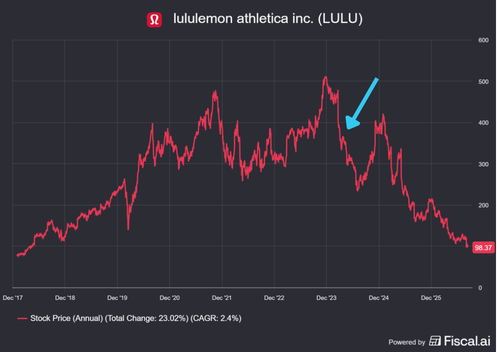
I used to source many of my stock ideas from YouTube. It was over 2 years ago when I first found Lululemon ($LULU) through an account I followed frequently (see green arrow below for when I started to research the business).
Source: Fiscal.AI Dashboard
I performed quite a bit of fundamental analysis, market research, and even first-hand surveys through Reddit on opinions of the and.
I came to the conclusion that the and moat was intact, there was still demand for the product (I forecasted this demand to continue), and the market was selling the business off irrationally.
So, I took a position.
I saw a quick ~40% gain in the coming months, only to see that profit disappear, and then some, over the following year.
As I saw my position falter, I did some more conceptual analysis and realized I underestimated how weak their advantages were.
I quickly learned that vertical integration and and advantage does not always stand the test of time.
It was in late 2025 that I sold. I was fortunate to realize this before losing a significant proportion of my original capital.
Only time will tell whether this turned out to be the right decision or not.
The lesson learned?
The market does not care how much time you spent researching an investment. It does not care how confident you were when you bought it. It just tells you what everybody thinks about the stock at a given point in time.
If the underlying business changes and/or you realized you made an error in your initial analysis, the original thesis may no longer be valid.
That is when you need to seriously consider selling and pursue other opportunities with the capital you have left.
The question should not be:
“How can I prove that I was right?”
The question should be:
“Is the reason I bought this investment still valid?”*
This singular question has personally made me a lot of money.
We can also approach this from the inverse perspective.
Sometimes new information can make you more bullish.
Maybe the company is growing faster than you originally expected. Maybe management has found a new reinvestment opportunity. Maybe the competitive advantage is stronger than you initially believed.
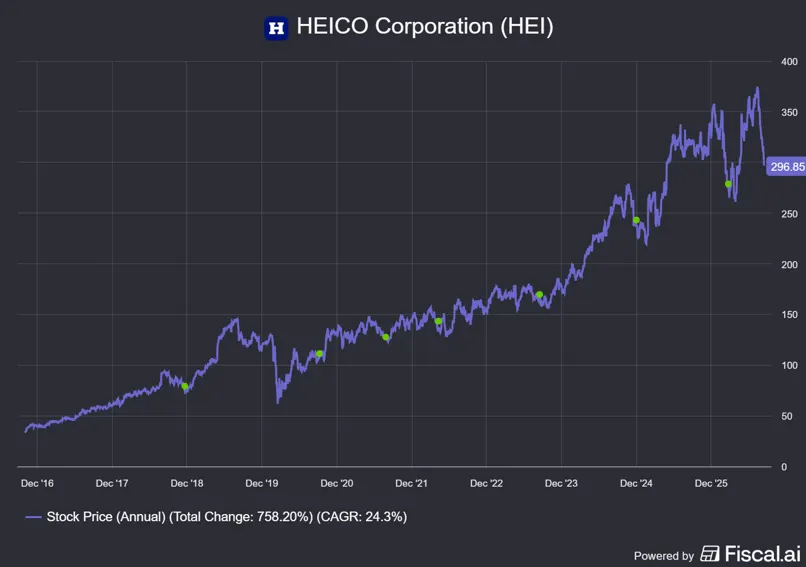
In those situations, you should not be afraid to increase your conviction and then your allocation simply because you already established an initial position or because the stock price increased from your cost basis.
Your original position size is not restrictive if you don’t want it to be.
You can add more along the way up if your position target and conviction support it:
Source: Fiscal.AI Dashboard
The key is finding the right balance between sticking to your guns amidst the volatility and remaining intellectually flexible.
When you master this balance, you’re much more likely to be right 6 times out of 10, as Peter Lynch praises so highly.
4. Taking Action: Building a Repeatable Process
So far, we have discussed where to find information, how to stress-test a thesis, and why humility is necessary throughout the process.
But there is one final piece that ties everything together.
You need a repeatable process.
Why?
Because every investment opportunity will look different on the surface.
One quality company may be growing revenue at 20%+ per year and be fairly priced:
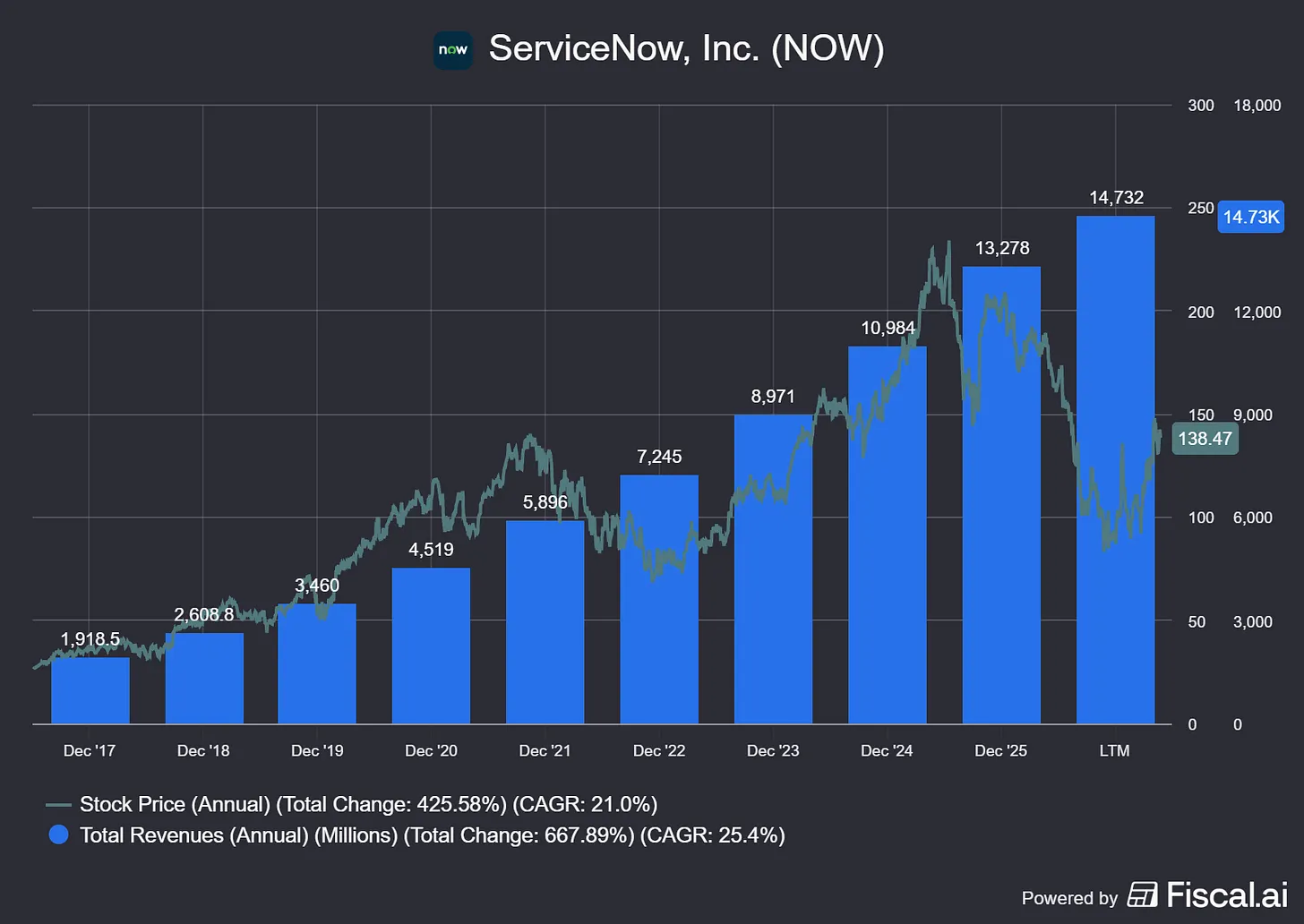
Source: Fiscal AI Dashboard
… While another steady compounder may be growing at 5%, but be unreasonably cheap:
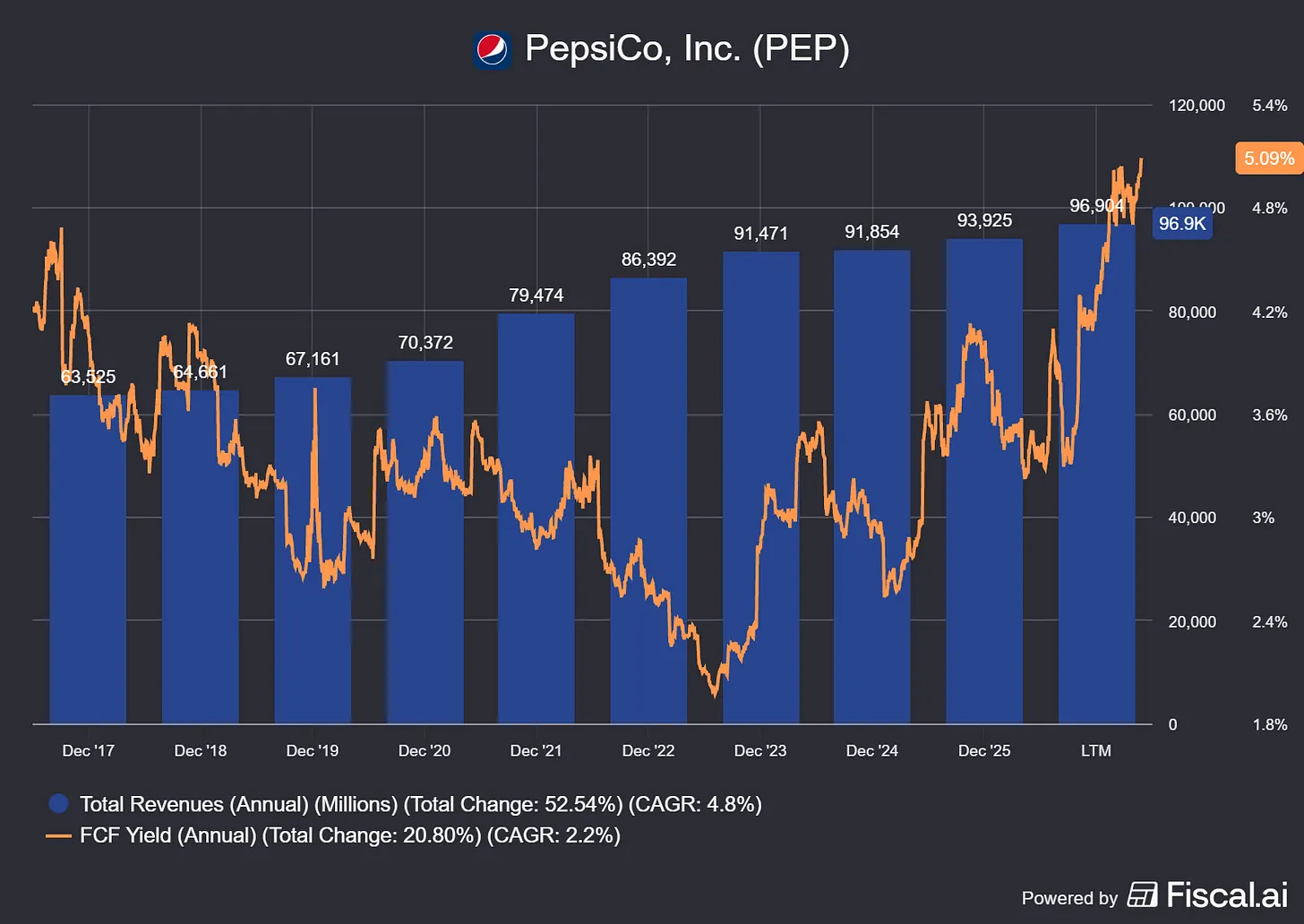
Source: Fiscal AI Dashboard
If you evaluate each company based on whichever characteristic happens to excite you the most, your conclusions will naturally become inconsistent.
You may give one company a pass for weak margins because growth is strong, while criticizing another company for the exact same weakness.
You may overlook a poor balance sheet because you like the CEO.
You may justify a high valuation because the business has performed well recently.
And before you know it, you are no longer evaluating investments rationally.
You are building a story around a company you already want to own.
This is why a repeatable process matters.
A structured framework allows you to evaluate businesses and formulate theses using the same general standards while still leaving room for individual judgment.
These standards allow you to form a complete, well-reasoned (and less biased) framework.
This ensures you don’t leave any opportunities behind and that you are using the same exact ideation funnel to arrive at a conclusion before you start the stress-test phase.

For me, that process starts with understanding the business.
- What does the company do?
- How does it make money?
- Why do customers choose it?
- What prevents competitors from taking away its economic profit?
- How much capital does the business need to grow?
- What does management do with the cash it generates?
And most importantly:
“Is this business likely to continue creating value over the next 5, 10, or 20 years?”
Once you understand the business, you can begin evaluating the financials, management team, competitive advantages, industry dynamics, valuation, and risks.
Then you can document your thesis in a way that makes it easy to revisit later.
This last part is incredibly important.
Your thesis should not simply exist in your head.
If it does, you are relying on memory to remember why you bought the investment, what assumptions you made, and what would cause you to change your mind.
Writing it down is the start of something great.

Source: Journally
A documented thesis gives you something to return to when emotions begin influencing your decisions.
You can compare what you originally believed with what is actually happening.
You can identify which assumptions have played out, which have not, and whether the underlying business is still moving in the direction you expected.
This turns investing into an ongoing process rather than a one-time decision.
And that is ultimately the point.
Build your thesis from the source.
Challenge your own assumptions.
Drop your ego.
And create a process that allows you to keep improving over time.
The market will always be noisy.
The future will always be uncertain.
But a well-developed investment thesis can give you something incredibly valuable: conviction grounded in understanding.